Our Location
Free Trade Tower, Xiyong street.
Chongqing, China

Free Trade Tower, Xiyong street.
Chongqing, China

For many wheelchair users, a manual chair represents freedom, control, and independence. It allows people to move under their own power, stay physically engaged, and navigate everyday environments with precision. However, long-term manual propulsion comes with a cost. The shoulders, elbows, and wrists take on repetitive strain day after day, often leading to fatigue, pain, or long-term injury.
This is where power assist technology quietly changes the equation.
Power assist systems are not about replacing your effort or turning a manual chair into a fully powered device. Instead, they are designed to support your movement, reduce physical stress, and extend how far and how comfortably you can travel—while preserving the familiar feel of a manual wheelchair.
At its core, a power assist system adds small, intelligent motors to a manual wheelchair. These motors only activate after you initiate movement by pushing the rims or engaging the control mechanism. In other words, nothing moves unless you move first.
You remain responsible for:
Starting and stopping
Steering and turning
Adjusting speed
Navigating obstacles
The system simply makes each push more efficient. A single stroke carries you farther, uphill resistance is reduced, and uneven terrain becomes less punishing on your body.
This balance—between assistance and autonomy—is what makes power assist appealing to many users who are not ready for, or do not want, a full power wheelchair.
Manual wheelchair propulsion places repeated load on relatively small joints, especially the shoulders. Over time, this can lead to conditions such as:
Rotator cuff injuries
Tendonitis
Carpal tunnel syndrome
Chronic joint pain
Clinicians often see these issues develop gradually, particularly in users who are active, travel long distances daily, or frequently encounter ramps and outdoor terrain.
Power assist addresses this problem by:
Reducing the force needed per push
Decreasing the total number of pushes required
Minimizing strain during starts, stops, and climbs
The goal is not to eliminate physical activity, but to make it sustainable over years—not just months.
Power assist systems rely on a combination of sensors, motors, and batteries that work together seamlessly in the background.
When you push on the rim, torque sensors immediately measure how much force you apply and in which direction. The system responds proportionally: a gentle push receives light assistance, while a stronger push triggers more support.
Once activated, the motor continues to provide assistance briefly, even after your hands leave the rim. This allows the chair to maintain momentum and travel farther with each stroke.
Importantly, assistance stops instantly when:
You stop pushing
You apply the brakes
The system detects a safety input
This instant cut-off ensures that the wheelchair never “runs away” from you. Control always stays in your hands.
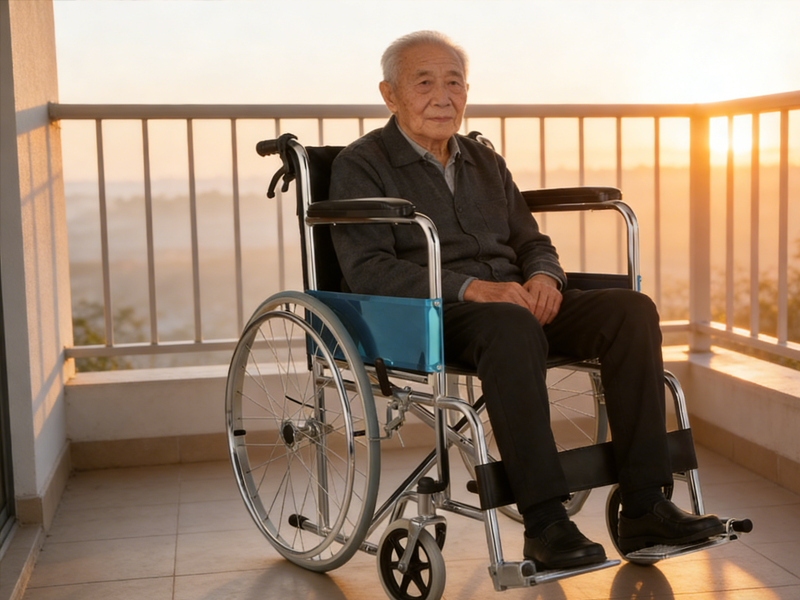
Motorized Wheel Systems
These replace the standard rear wheels of a manual wheelchair. The motors, sensors, and batteries are built directly into the wheel hubs, making the system visually clean and well balanced.
Because everything is integrated, these systems:
Preserve the chair’s original handling characteristics
Work well indoors and outdoors
Require minimal changes to propulsion technique
Many users prefer this option because it feels like a natural extension of their existing wheelchair rather than an added device.
Add-On Drive Assist Units
These systems attach to the frame of the wheelchair and use a separate powered wheel to provide propulsion. They are often removable and can be disengaged when not needed.
Drive assist units are commonly chosen for:
Outdoor travel
Longer distances
Users who want flexibility between assisted and unassisted modes
However, they may slightly affect maneuverability in tight indoor spaces compared to wheel-integrated systems.
Modern power assist systems typically use lithium-ion batteries, chosen for their balance of capacity and weight. Depending on the system and terrain, a full charge often supports a full day of typical use.
Most systems include:
Battery level indicators
Simple charging docks or ports
Overnight charging capability
That said, adding power assist does increase the overall weight of the wheelchair. For users who frequently lift their chair into a car, this is an important consideration. Some systems allow the batteries or wheels to be removed to make transport easier.
Ramps and Inclines
Climbing ramps demands sustained effort and places heavy stress on the shoulders. Power assist reduces the force required to maintain forward movement and helps prevent rollback, making ascents safer and less exhausting.
Rough or Uneven Terrain
Cracked sidewalks, gravel paths, and worn pavement disrupt momentum. Power assist compensates for this resistance, allowing you to maintain smoother, more consistent movement without constant restarting.
Indoor Environments
Well-calibrated power assist systems remain responsive at very low speeds. Precise movements—such as aligning with a table, navigating narrow doorways, or turning in tight spaces—remain manageable and predictable.
Power assist is particularly well suited for:
Individuals experiencing early signs of upper limb pain
Users with reduced endurance but sufficient strength for manual propulsion
People with progressive conditions affecting stamina or joint health
Those transitioning between a manual and power wheelchair
It is also commonly recommended as a preventive solution, helping active users protect their joints before serious injury develops.
A proper assessment with a rehabilitation professional ensures that the system matches the user’s strength, coordination, and daily routines.
Power assist occupies a middle ground between manual and fully powered mobility.
With power assist:
You stay physically active
You maintain a high level of control
Transportation is generally easier
Indoor maneuverability remains excellent
Full power wheelchairs, on the other hand, are essential when manual propulsion is no longer safe or feasible. They remove physical strain entirely but come with trade-offs in size, transport complexity, and user engagement.
Choosing between them is less about “better” or “worse” and more about what fits your current needs and future goals.
No mobility solution is perfect. Power assist systems require:
Regular charging
Occasional maintenance
A higher upfront cost
Insurance coverage varies by country and provider, and clinical justification is often needed. For some users, the added weight or system complexity may outweigh the benefits.
Understanding these trade-offs upfront helps avoid disappointment later.
1. Will power assist make me weaker over time?
No. Power assist still requires active propulsion. Most users continue to engage their upper body while reducing harmful overload on joints. It supports endurance rather than replacing effort.
2. Is power assist suitable for indoor use?
Yes. When properly adjusted, power assist systems respond accurately at low speeds, allowing precise control in homes, offices, and public buildings.
3. How do I know if power assist is right for me?
A clinical evaluation with a therapist or mobility specialist is the best starting point. They can assess your strength, daily travel needs, and long-term joint health to determine whether power assist is an appropriate solution.