Our Location
Free Trade Tower, Xiyong street.
Chongqing, China

Free Trade Tower, Xiyong street.
Chongqing, China
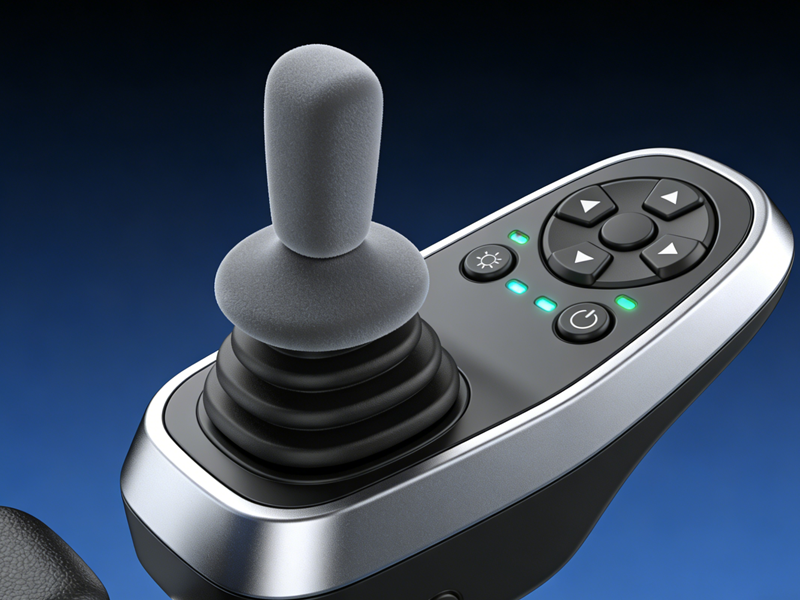
Choosing the right joystick for your power wheelchair is more than just a technical decision—it’s a choice that affects how you live and move every day. The joystick is the main interface between you and your wheelchair. It controls direction, speed, responsiveness, and how easily you navigate different environments. As a result, understanding the differences between joystick types and how they perform in real use is essential for selecting a setup that improves daily comfort and mobility.
At its core, a power wheelchair joystick converts movement from your hand, chin, head, or other body part into electrical signals that tell the wheelchair how to move. This includes:
Direction: forward, backward, left, and right
Speed: gradual increases or decreases depending on input
Precision: how quickly the chair responds to small adjustments
Most power wheelchairs use joysticks because they are intuitive, versatile, and compatible with many wheelchair control systems. However, joystick designs, sensitivity settings, and mounting options can vary widely—affecting usability for different physical abilities.
A standard joystick is the most common control setup on power wheelchairs. It typically features a single straight handle attached to a control module mounted on the armrest. Movement of the stick in any direction corresponds to changes in wheelchair movement.
Most people find this design intuitive because it mimics the basic function of a steering wheel or game controller. Pushing forward moves the wheelchair forward; pulling back reverses it; and moving sideways controls turns.
Standard joysticks are ideal for individuals who:
Have sufficient strength and control in their hands and wrists
Prefer a direct, familiar control scheme
Use their wheelchair both indoors and outdoors
Want a reliable, easy-to-learn system
Because they are so widespread, standard joysticks are found on most entry-level and mid-range power wheelchairs sold across the United States. They strike a strong balance between functionality and value, making them a default choice for many users.
Strengths:
Easy to use for most people
Compatible with a wide range of wheelchair models
Generally affordable and easy to replace
Limitations:
May cause discomfort if sustained pressure is needed
Not ideal for users with severe hand or wrist limitations
Less customizable unless paired with advanced electronics
Because of their broad appeal, standard joysticks are often the first recommendation clinicians make when evaluating a new user. However, it’s important to remember that “standard” doesn’t always mean “best” for everyone.
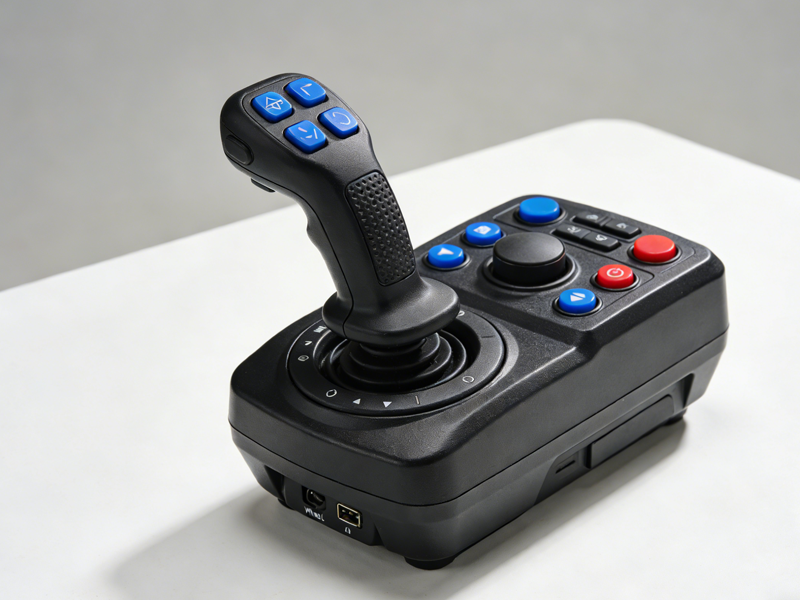
Compact joysticks, sometimes called shortened or midline joysticks, are designed to occupy less space and require less movement than standard joysticks. They mount closer to the user’s body and often respond to smaller directional inputs, making them a strong choice for people with limited reach or reduced range of motion.
These are particularly helpful when arm mobility is restricted, or when the user needs to navigate tight spaces, like narrow hallways or crowded indoor areas.
Less movement required: Requires a smaller range of physical motion to operate
Space-efficient: Mounts closer to the body, reducing strain
Responsive: Offers similar direction and speed control as standard joysticks
Compact joysticks can offer a great alternative for users who find standard joysticks physically demanding—but still want precise and responsive control.
For individuals who cannot use a standard or compact joystick due to limited hand or arm mobility, there are alternative joystick interfaces designed to meet those needs. These systems often require customized assessment and setup by a clinician or occupational therapist.
A head array uses pressure pads placed around the headrest area to detect small head movements or pressure through the user’s head. These movements translate into direction and speed commands for the wheelchair.
Head arrays are ideal for users with strong head control but limited or no hand function. They offer hands-free control, which can be life-changing for many individuals with severe mobility limitations.
Chin joysticks are similar to standard joysticks but are positioned near the face. The user operates them by moving their chin, often combined with switches to control additional functions.
Because chin joysticks still rely on a proportional joystick mechanism, they often feel familiar to users while accommodating those with limited arm movement.
Sip-and-puff controllers use air pressure generated by a user sipping or puffing into a tube. This air pressure is then converted into directional and speed controls. These systems are commonly used when very limited voluntary movement is possible.
They offer real independence for users with high-level spinal cord injuries or neuromuscular disorders.
Understanding the comparative benefits of each joystick type is important when selecting a system that fits your specific mobility needs. Below is a detailed comparison that summarizes key factors:
| Joystick Type | Best For | Ease of Use | Flexibility | Customization |
|---|---|---|---|---|
| Standard Joystick | Most users with hand control | ⭐⭐⭐⭐ | High | Medium |
| Compact Joystick | Limited reach or small spaces | ⭐⭐⭐⭐ | Medium | Medium |
| Head Array | Limited arm/hand use | ⭐⭐⭐ | High | High |
| Chin Joystick | No wrist/hand strength | ⭐⭐⭐ | Medium | Medium |
| Sip-and-Puff Controls | Severe mobility limitations | ⭐⭐ | High | High |
This comparison highlights how each joystick type aligns with user abilities and functional goals, helping you focus your evaluation on the right options.
Selecting a joystick is not just about the shape or mounting location—it’s about how the device responds and feels in real-world use.
Adjustable Sensitivity
Sensitivity determines how much movement is required to produce a response from the wheelchair. Some joysticks offer settings that make them more responsive to small movements—which can be beneficial for users with good motor control—while others can be tuned down to prevent unintended input.
Highly sensitive joysticks can be great for precision, but may feel “jumpy” for users with tremors or involuntary muscle movements. Adjustable sensitivity lets clinicians or technicians tailor responsiveness to the user’s comfort and control level.
Speed Profiles and Control Modes
Many joystick systems allow you to create or switch between different speed profiles. This means the user can choose a slower, more controlled mode for indoor navigation, and a faster mode for outdoor travel.
This flexibility enhances safety and confidence in a wide range of environments, and ensures the wheelchair behaves predictably.
Weather Resistance and Durability
For those who spend time outdoors, joystick durability becomes critically important. Joysticks with sealed electronics and water-resistant housings are better prepared for light rain or splashes and can extend the life of your control system.
Whether you live in a climate with frequent wet weather or simply want peace of mind during outdoor activities, weather-resistant joysticks are worth considering.
Maintenance and Care Tips
A power wheelchair is an investment in mobility. Maintaining all components—including the joystick—is essential for reliable performance and longevity.
Regular Cleaning
Dust and debris can accumulate around the base of the joystick. Gently clean it with a soft cloth and avoid harsh cleaners that could damage sensitive components.
Early Problem Detection
Pay attention to changes in performance: stiffness, delayed response, or erratic movements can be early signs of wear. Addressing these issues early with a technician can prevent more serious failures and impact on daily use.
From standard joysticks that offer straightforward control to advanced alternative interfaces designed for unique accessibility needs, every option serves a purpose. The key is understanding how your physical abilities, environments, and lifestyle intersect with joystick features.
With careful evaluation, professional assessment, and real-world testing, you can choose a joystick that doesn’t just control your wheelchair—but enhances your independence, comfort, and confidence.