Our Location
Free Trade Tower, Xiyong street.
Chongqing, China

Free Trade Tower, Xiyong street.
Chongqing, China
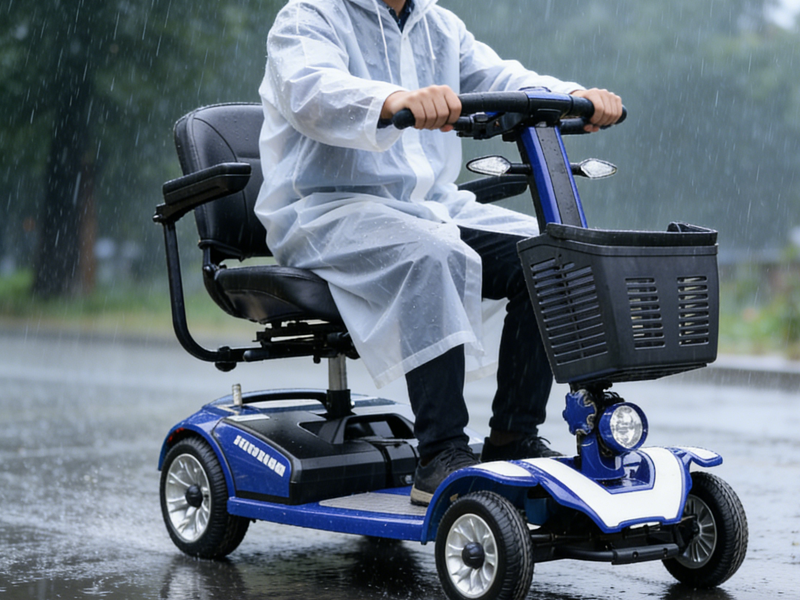
Heading out in wet weather isn’t a simple yes-or-no decision. While most modern scooters have some built-in protection against moisture, you’ve got to know their limits. Getting caught in a brief, unexpected shower is one thing, but intentionally riding through a downpour can cause serious damage to the electrical and mechanical parts.
The reality is that most scooters are built to handle light rain, not a prolonged soaking. That’s the general guidance from folks in the industry, and it’s worth listening to. You can learn more about mobility scooter weather resistance from industry experts, but the bottom line is that the most critical components aren’t designed for heavy water exposure.
Your scooter’s key parts—like the control panel (also called the tiller), the battery housing, and the motor—are shielded, but they aren’t completely sealed off. If you’re out in the rain for too long, water can eventually find its way in. This can lead to short circuits right away and even cause rust and corrosion down the road.
This diagram gives a good visual for when it’s okay to venture out versus when you’re better off staying dry inside.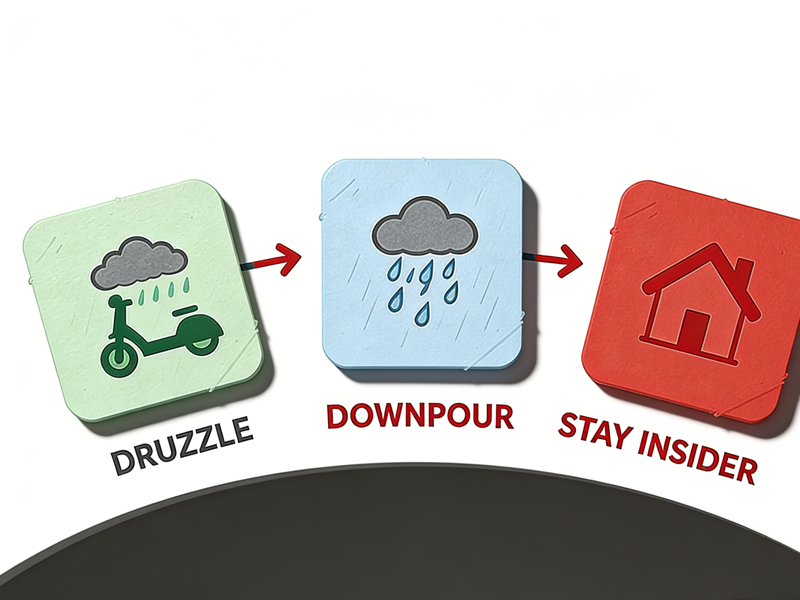
To help you make a smart call before heading out the door, here’s a quick-reference table. It’s designed to help you quickly assess the risk based on the weather and what kind of scooter you have.
| Weather Condition | Scooter Feature | Recommended Action | Risk Level |
|---|---|---|---|
| Light Drizzle / Mist | Standard, uncovered scooter | Proceed with caution. Slow down and avoid puddles. | Low |
| Steady, Light Rain | Scooter with tiller cover | Use protective covers for the seat and tiller. Keep your trip short. | Medium |
| Heavy Downpour | Any scooter | Do not ride. Seek immediate shelter if you’re caught outside. | High |
| After Rain (Wet Roads) | Scooter with good tires | Ride slowly. Be extra careful of slick spots and hidden potholes. | Medium |
Ultimately, it’s always better to be cautious. Using these guidelines will help protect both you and your scooter from taking unnecessary risks when the weather turns.
Ever been caught in an unexpected downpour? You quickly learn that not all mobility scooters are built the same when it comes to rain. How well yours holds up depends entirely on its water resistance—basically, how well the important bits are sealed off from moisture. It’s a bit like comparing a light windbreaker to a heavy-duty raincoat; both offer some protection, but you wouldn’t want to be in a storm with the wrong one.
To get to the bottom of this, you’ll need to look for a specific term in your scooter’s manual: the IP Rating. This stands for Ingress Protection, and it’s a standardized system that tells you exactly how protected a device is from stuff like dust and, more importantly for us, water.
When you see an IP rating, it’s the second number that really matters for rainy day riding.
The IP rating might sound technical, but it’s actually pretty straightforward. For water, the number goes from 0 (absolutely no protection) all the way up to 8 (can be fully submerged). For mobility scooters, you’ll really only see ratings in a much smaller, more practical range.
Here’s what those numbers actually mean for you and your scooter:
Here’s the bottom line: No mobility scooter is truly waterproof. These ratings are all about resistance, not immunity. No matter how high the IP rating, you should never intentionally submerge your scooter or leave it out in a prolonged, heavy storm. That’s a surefire way to cause permanent damage.
Knowing your IP rating is half the battle. The other half is understanding what you’re actually trying to protect. Water becomes a real problem when it gets into the electrical components. Your scooter is designed to shield these parts, but some areas are just more exposed than others.
There are three key spots you absolutely need to keep dry:
This is why scooters designed for the outdoors usually have tougher, better-sealed casings around these parts. It’s a big part of what makes them more reliable if you get caught in the rain. By knowing exactly where the weak spots are, you can be smarter about protecting your scooter and keeping it running for years to come.
Knowing your scooter’s limits is one thing, but actually putting that knowledge into practice when the skies open up is what really counts. Let’s move from theory to action with a practical playbook for navigating wet conditions with confidence.
Think of this as a pre-flight check for your scooter. A few minutes of preparation before, during, and after every rainy-day ride can be the difference between a safe trip and a costly accident.
Before you even dream of heading out into a downpour, a quick once-over can save you a world of trouble. It’s all about being proactive to keep yourself safe and your scooter running smoothly.
These simple checks are just the start. For a more complete look at scooter safety, take a look at our guide on the 10 best tips on how to stay safe on your mobility scooter.
Once you’re on the move, your mindset needs to switch to defensive driving. Your scooter handles completely differently on wet pavement, and you need to be extra sharp to compensate for it.
Your two main goals? Maintain control and stay visible. That means adjusting your speed and being hyper-aware of your surroundings. Remember, your braking distance can nearly double on slick surfaces.
Slow and Steady Wins the Race: Drop your speed way down. Flying through wet patches is the fastest way to hydroplane—that scary moment when your tires lose contact with the road, leading to a total loss of control.
Also, be wary of puddles. What looks like a shallow splash could be hiding a deep pothole just waiting to give you a nasty jolt or, worse, throw you off balance. It’s always best to steer clear of standing water.
Your safety routine isn’t over just because you’ve reached your destination. What you do next is crucial for preventing long-term moisture damage to your scooter’s delicate electronics.
Take a few minutes to give your entire scooter a thorough wipe-down with a dry cloth. Pay special attention to the control panel, the seat, and any exposed electrical connectors. Let it air dry completely in a sheltered spot before you even think about plugging it in to charge.
Making it home through a downpour is only half the battle. What you do right after you park your scooter is just as important for preventing the slow, silent creep of water damage. If you just leave it, that lingering moisture can lead to rust, corrosion, and electrical problems down the road.
Think of it like coming inside after a walk in the snow; the first thing you do is take off your wet coat and boots to dry. Your scooter needs that same immediate attention. The first step is always a thorough wipe-down with a soft, dry cloth. Don’t just give it a quick once-over—really focus on every nook and cranny that was exposed to the rain.
This simple post-ride habit can save you from expensive repairs and seriously extend the life of your scooter.
Your main goal here is to get rid of all the surface water and give any hidden moisture a chance to evaporate. Start by meticulously drying the most vulnerable spots.
After drying, you might notice some pesky water spots left behind from minerals in the rainwater. If you’re wondering how to get rid of them, learning how to remove water spots can help keep your scooter’s finish looking sharp.
Once it’s wiped down, park the scooter in a dry, well-ventilated place like a garage or a shed. This lets any moisture trapped in unseen crevices evaporate naturally, which is crucial for its long-term health. The consistent care you put into your machine, much like following these maintenance tips for electric wheelchairs, makes all the difference.
Q: Can I ride my scooter in the rain if it has an IPX4 rating?
A: Yes, for light rain and splashes. Avoid prolonged exposure or puddles.
Q: What happens if my scooter gets wet inside the battery compartment?
A: Immediately turn it off, remove the battery if possible, and allow it to dry completely. Charging while wet can cause serious damage.
Q: Are scooter canopies worth it?
A: Absolutely. They protect you from rain, keep controls dry, and increase overall comfort.
Q: Can I use my scooter on wet grass or mud?
A: Only if your scooter is designed for outdoor terrain. Many standard scooters are not suitable for muddy surfaces, as tires may slip and motors may overheat.
Q: How often should I perform maintenance after riding in the rain?
A: Always inspect and dry the scooter after each rainy ride. Lubricate moving parts weekly if frequently exposed to moisture.
Mobility scooters can be used in the rain, but only with proper preparation, cautious riding, and post-ride maintenance. Understanding your scooter’s water resistance rating, investing in protective accessories, and following safe riding practices ensures both safety and longevity of your device.
By taking the time to prepare your scooter, protect yourself, and perform maintenance, you can confidently navigate rainy conditions while maintaining independence and mobility.