Our Location
Free Trade Tower, Xiyong street.
Chongqing, China

Free Trade Tower, Xiyong street.
Chongqing, China
For millions of people around the world with limited mobility, staircases represent a silent but formidable barrier. While the quest for accessibility in architecture continues, many residential and public buildings still lack ramps or elevators. The result is a daily challenge that, for caregivers and users alike, can feel isolating. But thanks to breakthroughs in assistive technology, traditional mobility limitations are being redefined. Enter the modern stair‑climbing wheelchair — a device that doesn’t just assist movement but restores independence, dignity, and quality of life.
For many wheelchair users, stairs are more than an inconvenience — they are a barrier that limits access to essential living spaces and social participation. Traditional wheelchairs excel on flat surfaces but are, by design, unable to climb stairs. Even with external lifts or stairlifts, users may still need assistance transferring to and from seats, relying heavily on caregivers or fitting permanent home modifications.
Modern stair‑climbing wheelchairs change that paradigm by incorporating motorized systems, smart stability control, and ergonomic design to allow self‑propelled stair navigation. These devices bridge the gap between flat surface mobility and multi‑story accessibility without requiring house remodeling or external aids.
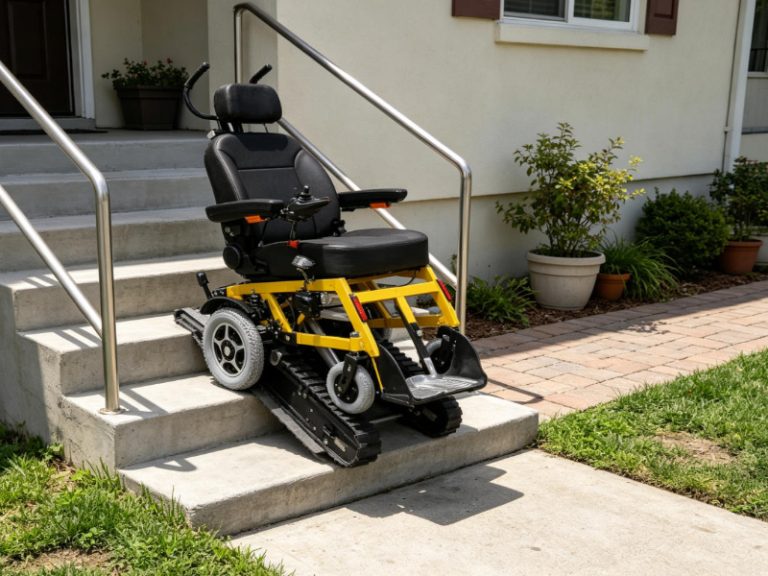
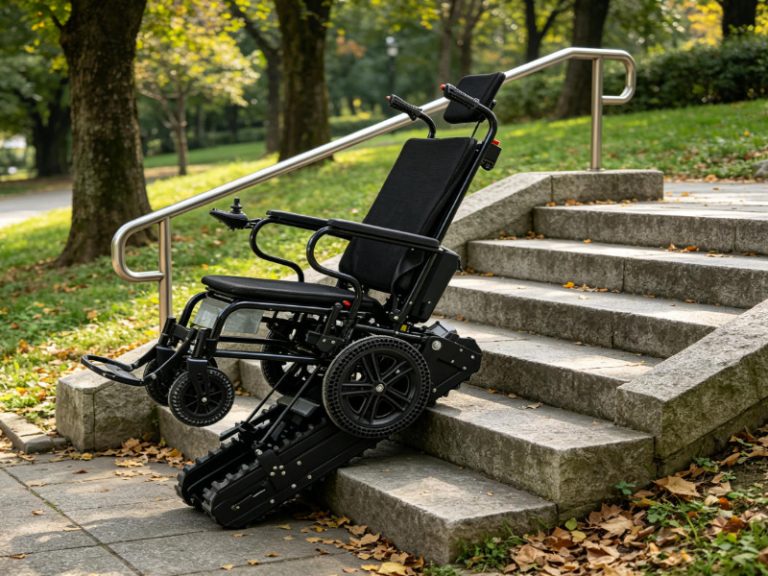
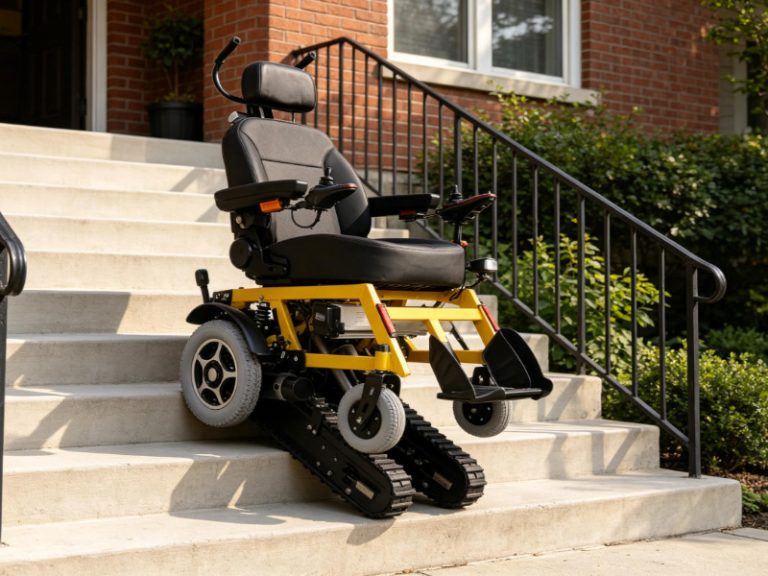
Stair‑climbing wheelchairs represent a class of advanced mobility aids engineered to ascend and descend staircases safely and comfortably. Unlike conventional wheelchairs, they integrate power‑assisted climbing mechanisms — including tracks or multi‑wheel systems, motors, and stabilizing tech — so that users can navigate stairways with confidence and reduced reliance on others.
The fundamental difference between a stair‑climbing wheelchair and a standard electric wheelchair is in the drive and control system:
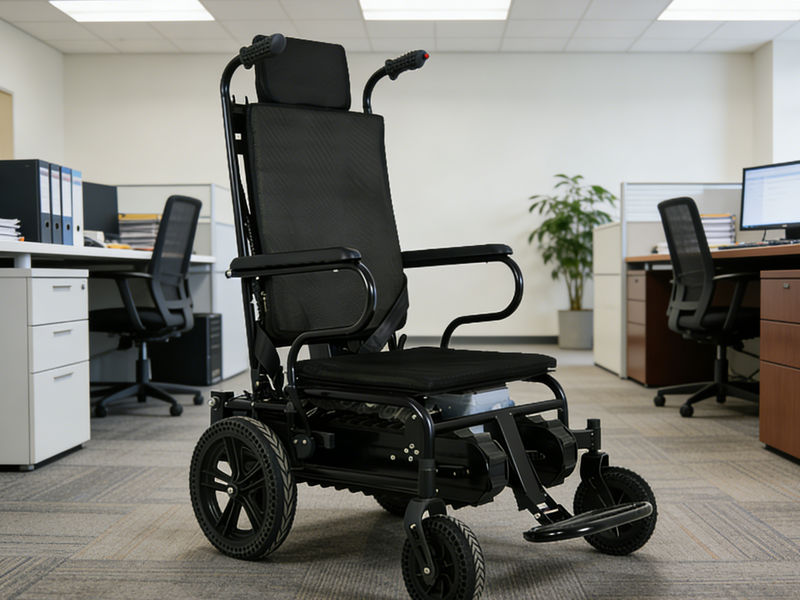
Dual‑Mode Operation: These wheelchairs offer a level‑ground driving mode for everyday use and a stair climbing mode that engages specialized mechanisms when approaching steps.
Motorized Tracks or Wheels: Most advanced models use a tracked drive system to maintain traction on stair edges, ensuring a steady, controlled ascent or descent.
Smart Stability Systems: Integrated sensors continuously adjust balance and tilt, protecting against tipping and providing a smooth ride.
This means that stair navigation becomes a methodical, safe motion rather than an ad‑hoc effort requiring brute strength or awkward lifting.
Let’s look closely at two models that represent leading solutions for home stair accessibility: YSE201M and YSE203. These wheelchairs combine thoughtful engineering, user‑centric design, and residential suitability.
The YSE201M is engineered to provide a dependable balance of performance, comfort, and maneuverability — ideal for residential environments and everyday use.

Dual Mode Functionality: Combines smooth manual drive on flat floors and powerful electric climbing on staircases, offering flexibility for most users.
Powerful Motor & Battery: A 120 W motor powered by a 20 Ah lithium battery enables continuous stair climbing — up to around 500 stair steps at a steady pace (~15 steps/minute).
Safety‑First Design: The built‑in climbing lock system slows descent and engages reverse lock features during stair transitions, enhancing secure movement.
Comfortable Seating: A 44 cm wide seat, comfortable artificial leather cushion, and ergonomic backrest support long periods of use.
Compact Foldability: Folding dimensions make storage and transport manageable, even in smaller residences.
Durable Build with High Load Capacity: Steel frame supports up to 150 kg, ensuring reliable performance for a wide range of users.
The YSE201M is specifically designed to navigate staircases commonly found in residential buildings — with typical stair width, slope, and turning space requirements that accommodate most stair landing designs. Its lighter weight and foldability make it especially suitable for families where portability and space are key considerations.
For users who still want to actively participate in household life without being restricted to ground‑floor rooms, this wheelchair offers a practical, flexible solution.
For users seeking a powerful, electrically driven solution with top performance in stair navigation, the YSE203 stands out as a premium choice with advanced capabilities.
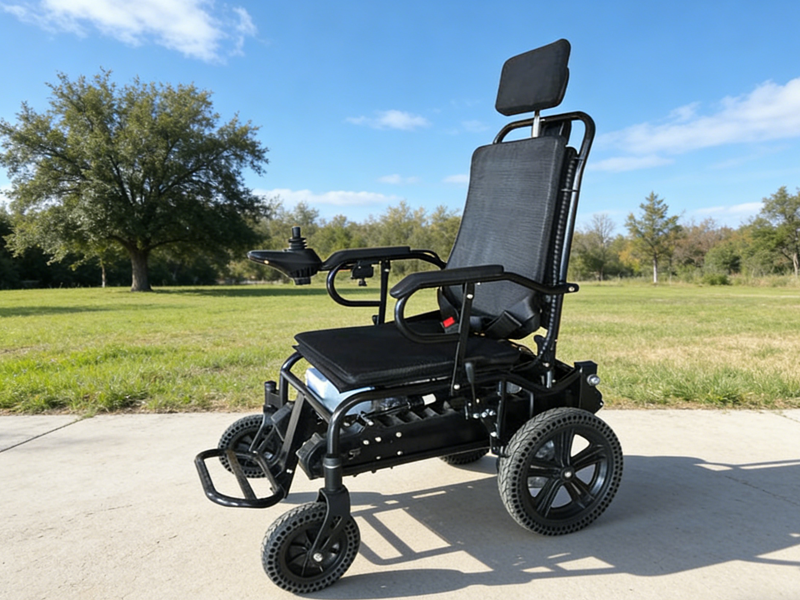
Electric Climbing & Driving: Powered by a dual electric drive system, the YSE203 seamlessly transitions between driving and stair climbing.
High Climbing Capacity: Capable of scaling up to 500 stair steps per charge at an efficiency of around 15 steps per minute.
Robust Motor System: Equipped with a 24 V lithium battery and a powerful set of climbing and driving motors for consistent performance.
Foldable for Storage: The clever foldable framework reduces the storage footprint dramatically, making it more practical for homes or transport.
Ergonomic Comfort: Adjustable breathable cushion and reinforcing design features improve comfort during extended use.
Universal Controller: Intuitive handling for users or caregivers with minimal learning curve.
As a fully electric stair‑climbing wheelchair with powerful drive systems, the YSE203 is particularly well‑suited for users who prefer maximum independence without manual driving. Its tracked system provides steady grip on stair surfaces while its compact fold‑down feature eases portability.
Even narrow staircases with moderate slopes can be managed safely, giving users confidence and responsiveness that traditional aids simply cannot match.
Climbing stairs no longer requires reliance on others. Users can access all floors of their home at will, without transfers or external assistance — a dramatic shift in autonomy that improves overall quality of life.
In many cases, users report feeling a renewed sense of freedom and confidence, reducing anxiety about barriers that once seemed impossible.
Traditional stair navigation for wheelchair users often involves lifting, carrying, or using bulky stairlifts — tasks that place significant physical strain on caregivers. Stair‑climbing wheelchairs shift the physical effort away from human strength to intelligent engineering, reducing risk of injury for both users and caregivers.
While home modifications like stairlifts or elevator installations can be costly and permanent, stair‑climbing wheelchairs offer a non‑invasive accessibility option that works within existing architectural footprints.
Accessibility isn’t just physical — it’s psychological. With the ability to move freely between floors, users can join family activities, host guests upstairs, and maintain more active roles in their homes and communities.
Modern mechanisms ensure that users are balanced, stable, and protected during stair navigation. Many models include intuitive controls, anti‑tip systems, and cushioned seating that holds up under frequent use.
When considering a stair‑climbing wheelchair for residential use, it’s important to weigh several factors:
Stair Dimensions & Home Layout — Measure stair width, slope, and landing space to ensure compatibility.
User Ability & Preferences — Some users may prefer manual assist systems, while others need full electric support.
Battery Range & Speed — Evaluate how many stair climbs are needed daily and choose a model with appropriate battery performance.
Comfort & Seating Support — Especially for long distances or frequent daily use, ergonomic design matters.
Storage & Portability — Space‑saving foldability can be essential in smaller homes.
Both YSE201M and YSE203 deliver high performance, but the choice ultimately depends on how you plan to use the wheelchair: lighter, more flexible mobility with YSE201M or higher electric performance and premium comfort with YSE203.
The narrative of mobility aids has evolved from static wheelchairs and cumbersome stairlifts to dynamic stair‑climbing solutions that redefine what accessibility looks like in the modern home. With models like the YSE201M and YSE203, staircases become navigable milestones rather than immovable obstacles.
For users longing for independence, caregivers seeking smarter tools, and families striving for inclusive living environments, stair‑climbing wheelchairs offer a compelling answer — one rooted in innovation, practicality, and real‑world human experience.
By choosing the right stair mobility aid, you’re not just investing in a device — you’re investing in freedom, possibility, and a life less limited by boundaries.