Our Location
Free Trade Tower, Xiyong street.
Chongqing, China

Free Trade Tower, Xiyong street.
Chongqing, China
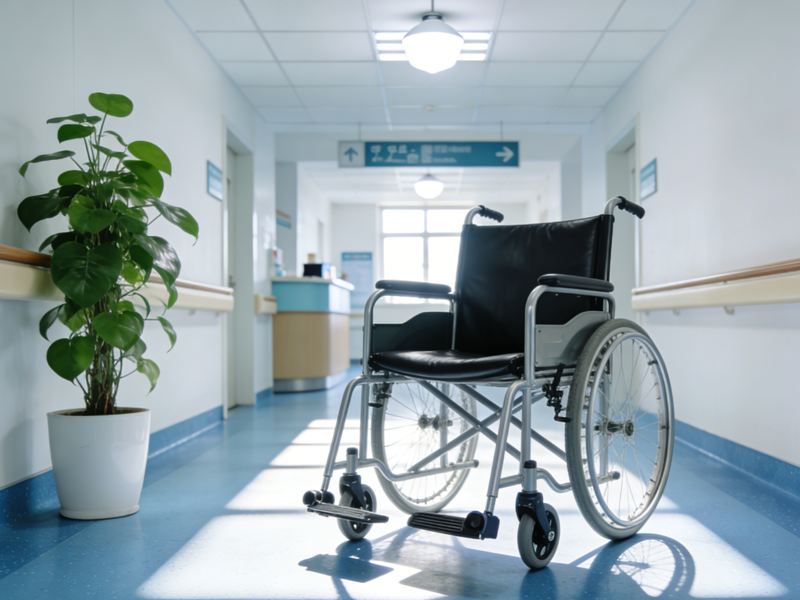
Wheelchairs are more than mobility tools — in medical environments they are essential equipment that affects patient safety, comfort, transfer efficiency, and overall quality of care. Selecting the right wheelchair manufacturers for hospitals, clinics, and rehabilitation centers requires careful consideration: durability, clinical performance, supply reliability, certification compliance, and global support are all critical.
In a busy hospital setting, wheelchairs are used constantly — for short transfers from bed to treatment areas, in lengthy rehabilitation programs, and sometimes for long‑term mobility support. Yet, the demands placed on these devices often outstrip what generic consumer mobility products can handle. Medical wheelchair procurement must focus on:
Safety and stability – Hospital chairs often need to support a wide range of patient weights and provide reliable braking and balance in dynamic environments.
Ease of cleaning and infection control – Materials and finishes should withstand frequent sanitization.
Ergonomic comfort – Proper posture support reduces pressure sores and improves patient experience.
Customization and adaptability – From bariatric models to pediatric chairs, flexibility matters.
Regulatory compliance – Certifications such as ISO, CE and other medical device standards ensure quality and safety.
With these priorities in mind, let’s explore the top manufacturers and solution providers that hospitals trust around the world.
These manufacturers have decades of industry leadership, global distribution networks, and strong reputations among healthcare institutions.
Ottobock SE & Co. KGaA – Based in Germany, Ottobock is one of the world’s most respected orthopaedic and mobility brands. Known for robust engineering, their wheelchairs are often selected for clinical and rehabilitation settings where precision, patient support, and durability are top priorities.
Invacare – An iconic American name in the mobility equipment industry, offering a complete portfolio from basic transport chairs to complex rehabilitation models used by hospitals and care facilities globally.
Permobil AB – A Swedish manufacturer specializing in advanced power wheelchairs with premium seating technology, posture support, and programmable controls — ideal for patients with complex needs.
Sunrise Medical – Widely known for its Quickie and Sterling lines, Sunrise combines innovation with extensive customization, making their chairs a solid pick for hospital environments that require ergonomic performance.
Pride Mobility – A major presence in power wheelchair and mobility scooter markets, offering chairs with reliable performance and excellent after‑sales support — often selected by facilities balancing performance with cost.
Not all great wheelchair solutions come from traditional legacy brands. A number of innovative companies are pushing boundaries in design, comfort and adaptability:
Phoenix Instinct – A UK‑based brand developing AI‑assisted manual wheelchairs with smart centre‑of‑gravity adjustment for enhanced stability and user comfort, a cutting‑edge option for advanced rehabilitation programs.
TiLite – U.S. manufacturer focused on custom, ultralight wheelchairs made from premium materials such as titanium and carbon fiber, ideal for hospital departments that emphasize lightweight and performance in manual mobility.
Among the emerging wheelchair manufacturers making inroads in international healthcare markets, Iyasocare stands out as a practical choice for hospitals and healthcare distributors.
Why Iyasocare matters for medical buyers:
Wide product range: Manual, electric, transfer, and specialty wheelchairs available — including models for hospitals, rehabilitation centers, and long‑term care.
Certification and quality control: The company holds ISO 13485 and CE certifications, aligning with international medical device quality standards — an important factor in hospital procurement.
Customization options: Iyasocare’s OEM/ODM services allow B2B buyers and hospital supply coordinators to tailor chair features such as seat dimensions, frame materials, wheel configurations, and even facility branding — making it easier to standardize equipment across wards or regions.
Global reach: Products are reportedly sold in more than 50 countries, combined with scalable production capacity to support both small batch and large institutional orders.
In short, Iyasocare blends global compliance, product diversity and customization in ways that make it attractive for hospitals looking for reliable yet flexible suppliers.
1. Clinical Requirements Versus Budget Reality
You might opt for premium wheelchair systems with advanced features like pressure redistribution seating and powered positioning for long‑term care wards. But for high‑volume transport within emergency or outpatient departments, rugged, easy‑clean basic models can be more appropriate.
2. After‑Sales Support and Parts Availability
Hospitals have different logistical needs than home users. Warranty coverage, spare parts availability, and service responsiveness should factor into procurement decisions.
3. Regulatory and Safety Compliance
Make sure the manufacturer meets regional and international medical device standards, meaning products are tested for safety, reliability and durability under frequent clinical use.
Q1: What’s the difference between a hospital wheelchair and a consumer wheelchair?
A: Hospital wheelchairs are designed for continuous clinical use, with stronger frames, hospital‑grade materials that withstand frequent cleaning and sanitization, and features that support patient transfers, safety, and staff ergonomics. Consumer wheelchairs are usually optimized for individual mobility at home or travel, not high‑frequency hospital workflows.
Q2: Should hospitals choose electric wheelchairs over manual ones?
A: It depends on patient needs. Electric wheelchairs are ideal for patients with limited upper body strength or for wards with longer transport distances. Manual wheelchairs remain valuable for short transfers, emergency use, and situations where simplicity and low maintenance are priorities.
Q3: How important are certifications like ISO or CE for wheelchair procurement?
A: Certifications like ISO 13485, CE, and other regional standards demonstrate that a manufacturer has robust quality management, compliance with medical device regulations, and products that meet safety benchmarks — crucial for risk‑averse hospital procurement.
Selecting the best wheelchair manufacturers for hospitals isn’t just about brand names — it’s about matching technology, quality, service, and cost with real clinical needs. From global leaders like Ottobock and Invacare, to innovators like TiLite and Phoenix Instinct, and versatile suppliers like Iyasocare whose products combine certification compliance with global reach, there are excellent options to fit every healthcare context.