Our Location
Free Trade Tower, Xiyong street.
Chongqing, China

Free Trade Tower, Xiyong street.
Chongqing, China
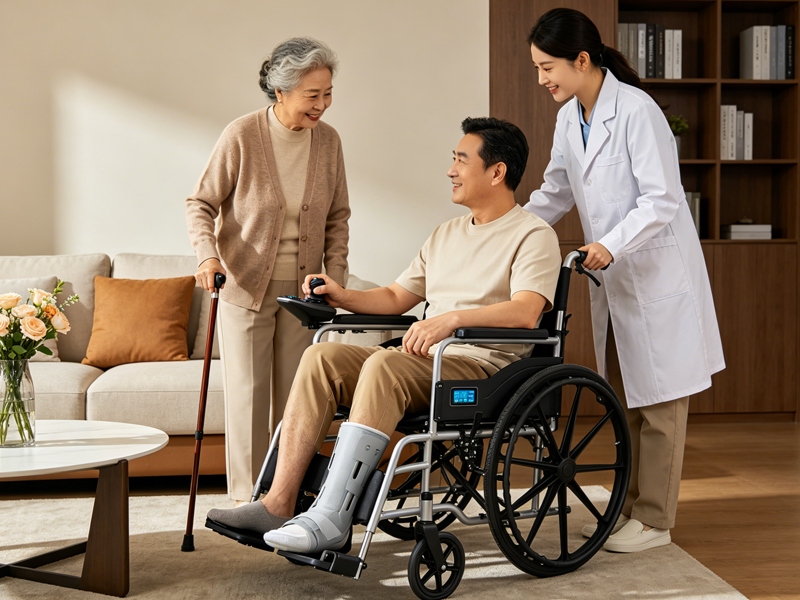
Mobility technology has changed dramatically over the past decade. Traditional manual and powered wheelchairs still serve millions of users worldwide, but a newer category is gaining attention: smart wheelchairs. These advanced mobility devices combine electric movement with sensors, intelligent controls, connectivity, and safety systems designed to improve independence.
Who are smart wheelchairs actually suitable for?
Not every user needs one. For some people, a standard wheelchair is still the better option. For others, a smart wheelchair can be life-changing.
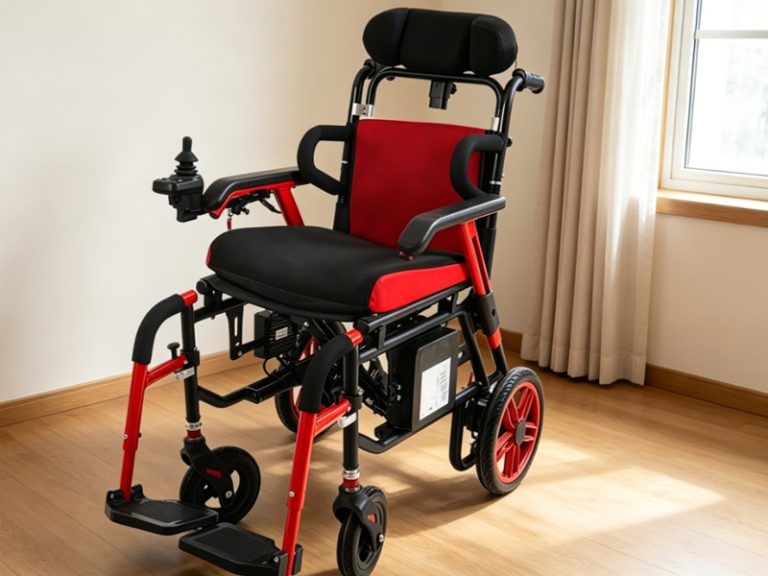
A smart wheelchair is usually a powered wheelchair enhanced with technologies such as:
Researchers commonly define smart wheelchairs as powered wheelchairs combined with sensors, computing systems, and assistive technology to improve mobility and safety.
In short, they are designed not only to move—but to assist, protect, and empower the user.
Instead of assuming smart wheelchairs are for “everyone with mobility issues,” it’s better to understand specific user groups.
1. People With Limited Upper Body Strength
Many wheelchair users struggle with fatigue from manual propulsion or cannot safely operate a standard manual chair for long distances.
This includes people with:
For these users, a smart wheelchair can reduce physical strain while preserving independence.
Features like joystick steering, voice control, or touch-free input can make everyday movement easier and safer.
2. Seniors Who Want to Stay Independent Longer
Aging often brings a combination of mobility loss, reduced reaction speed, balance issues, and fatigue.
Older adults living:
may benefit significantly from smart wheelchairs.
Research involving wheelchair users found that safety-related functions were among the most desired smart wheelchair features, especially among older adults.
That makes sense. For seniors, preventing falls or collisions may matter more than speed or high-tech extras.
3. Users With Cognitive or Visual Challenges
Some wheelchair users can physically operate a chair but may struggle with:
Smart navigation systems, collision alerts, lane correction, and route assistance can reduce risk and improve confidence.
These tools are especially valuable indoors—in hospitals, assisted living communities, shopping centers, or airports.
4. People Recovering From Injury or Surgery
Temporary disability is often overlooked in wheelchair discussions.
Smart wheelchairs may help users recovering from:
During recovery, users may lack full strength or coordination. A smart wheelchair can bridge the gap between dependence and full mobility.
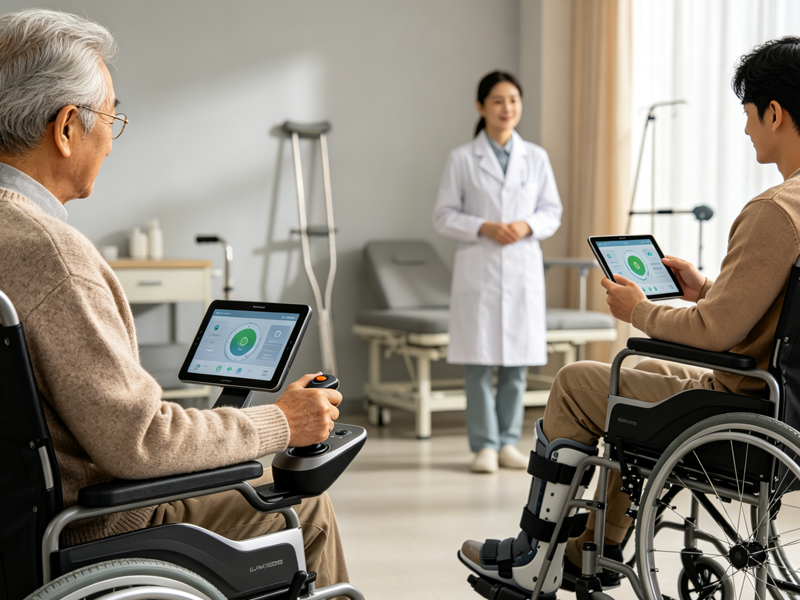
Some rehabilitation centers increasingly use advanced powered mobility devices to support patient movement and recovery workflows.
5. Users Who Need Greater Safety Outdoors
Outdoor environments are unpredictable.
Common challenges include:
For users who travel independently, smart wheelchairs with anti-tip systems, terrain adaptation, and obstacle alerts can reduce anxiety and improve real-world usability.
This is particularly useful in cities where tight pedestrian spaces demand faster reaction time.
Some users cannot use standard joysticks consistently.
They may need:
Emerging research shows increasing success with gesture-controlled and multimodal smart wheelchair systems built for users with more complex physical limitations.
For these individuals, smart wheelchairs are not a luxury—they may be the only realistic path to independent movement.
Smart wheelchairs are powerful tools, but they are not always the best solution.
A standard manual or powered wheelchair may be better if:
Sometimes the smartest decision is choosing a reliable, lower-tech option that perfectly matches daily needs.
Urban Living
People living in cities often face:
Smart steering assistance and compact turning control can help tremendously.
Independent Daily Living
If a user cooks, shops, works, or studies independently, reducing mobility friction matters.
Saving energy during movement means more energy for life itself.
Caregiver Support Is Limited
In many households, family caregivers are balancing jobs, children, and finances.
A smart wheelchair can reduce dependence for transfers, movement, supervision, and location tracking.
Long-Term Use Expected
If someone will rely on mobility devices for years, investing in comfort, safety, and future-proof features may be worthwhile.
| User Need | Best Smart Feature |
|---|---|
| Weak arm strength | Powered drive + joystick |
| Cannot use hands well | Voice or alternative controls |
| Fall risk | Anti-tip + auto braking |
| Navigation difficulty | Obstacle detection |
| Lives alone | GPS + remote alerts |
| Long daily use | Pressure relief seating |
| Outdoor mobility | Terrain handling |
Smart wheelchairs typically cost more than standard powered chairs because of sensors, electronics, batteries, and advanced control systems.
However, value should be measured by:
For many families, these benefits outweigh upfront costs.
Home Layout
Even the best wheelchair struggles in a poorly accessible home.
Measure:
Service and Repairs
Advanced wheelchairs need dependable support.
Before buying, ask:
Learning Curve
Some users love technology. Others hate complexity.
Always match the user’s comfort level—not just the spec sheet.
The Future of Smart Wheelchairs
The market continues to grow as AI, sensors, batteries, and connectivity improve. Industry forecasts show strong expansion through the next decade as aging populations and demand for independent living rise globally.
Expect future models to include:
Smart wheelchairs are best suited for people who need more than movement.
They are ideal for users who need:
They are especially valuable for seniors, users with progressive conditions, people with severe mobility limitations, and anyone whose daily life improves through intelligent support.
The right wheelchair is never the most expensive one.
It is the one that gives the user the most freedom, dignity, and control.
1. Are smart wheelchairs only for people with severe disabilities?
No. They can also benefit seniors, rehabilitation users, and people with moderate mobility issues who need extra safety or reduced fatigue.
2. Can smart wheelchairs be used outdoors?
Yes, many are designed for both indoor and outdoor use, especially models with terrain control, suspension, and obstacle detection.
3. Are smart wheelchairs difficult to learn?
Most modern models are user-friendly. Many users adapt quickly, especially with joystick controls and guided setup. Advanced features can usually be added gradually.