Our Location
Free Trade Tower, Xiyong street.
Chongqing, China

Free Trade Tower, Xiyong street.
Chongqing, China

Choosing the right wheelchair tires might seem like a small decision, but it can have a noticeable impact on everyday mobility. Whether you use a wheelchair to move around your home, commute through busy streets, visit shopping centers, or explore outdoor spaces, your tires influence how comfortably and confidently you travel.
Among the most common options, pneumatic and solid wheelchair tires stand out for very different reasons. Pneumatic tires are filled with air and are known for their cushioning and shock absorption. Solid tires, on the other hand, do not require inflation and are valued for their low maintenance and resistance to punctures.
So, which one is better?
The answer depends less on which tire is technically superior and more on how, where, and how often you use your wheelchair. A person who spends most of the day navigating smooth indoor floors may have completely different priorities from someone who regularly travels over sidewalks, gravel paths, and uneven outdoor surfaces.
Before choosing a replacement or upgrading your current wheelchair, it helps to understand what separates these two tire types. Let’s take a closer look at their performance, practical advantages, limitations, and the factors that matter most when making a decision.
Although both tire types serve the same basic purpose, their internal construction is quite different. This difference affects almost everything from riding comfort to maintenance requirements.
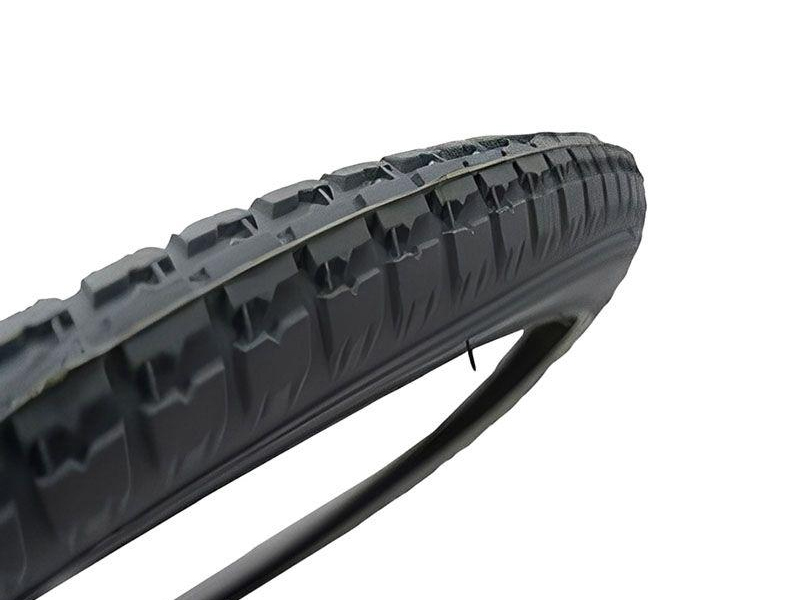
Pneumatic Wheelchair Tires: Comfort Through Air Cushioning
Pneumatic wheelchair tires are air-filled tires, similar in principle to the tires found on bicycles. They consist of a rubber outer tire surrounding an inner tube, although some models use tubeless construction.
Air pressure plays an important role in how these tires perform. When properly inflated, the compressed air inside the tire acts as a cushion between the wheelchair and the ground.
This cushioning effect helps absorb vibrations and reduce the impact of bumps, cracks, and uneven surfaces. Instead of transferring every small disturbance directly to the wheelchair frame and user, pneumatic tires help soften the ride.
For wheelchair users who regularly travel outdoors, this can make a meaningful difference. Uneven sidewalks, brick pathways, small stones, and rough pavement may feel less jarring with properly maintained pneumatic tires.
Another advantage is that pneumatic tires can offer different tread patterns and rubber compounds. Depending on the design, they may provide good traction across a variety of surfaces.
However, air-filled tires need attention. They gradually lose pressure, and sharp objects such as glass, thorns, or metal fragments can cause punctures. Regular pressure checks and occasional repairs are part of owning this type of tire.
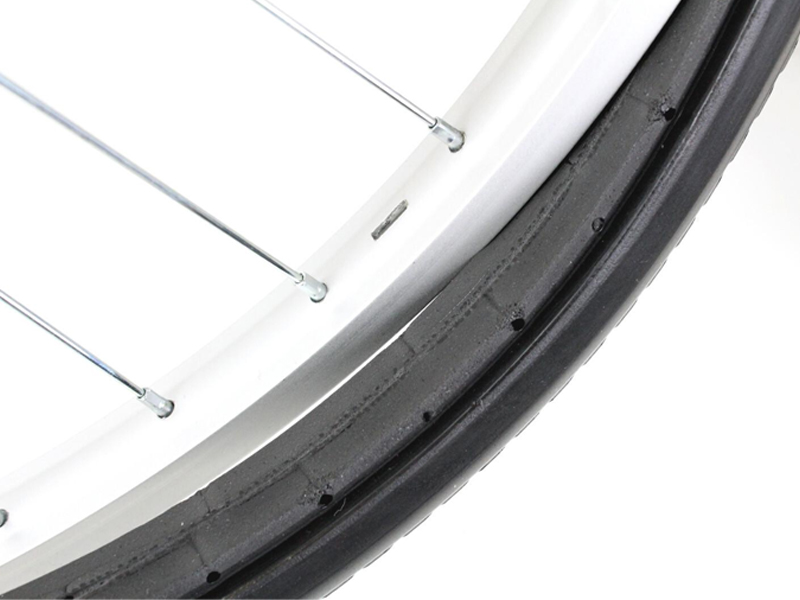
Solid Wheelchair Tires: Convenience Without Inflation
Solid wheelchair tires are made from solid rubber, polyurethane, or other durable materials. Unlike pneumatic tires, they contain no air chamber that needs to be inflated.
Their biggest selling point is simplicity.
Since there is no inner tube to puncture, users do not have to worry about unexpected flat tires. This makes solid tires especially appealing for people who prefer a low-maintenance wheelchair setup.
They are also useful in environments where punctures are more likely to occur, such as industrial facilities, workshops, or outdoor areas with debris.
Solid tires can be particularly practical for indoor mobility. Smooth floors in hospitals, offices, shopping centers, and homes generally place fewer demands on tire cushioning.
The trade-off is that solid tires typically absorb less shock than pneumatic tires. On rough roads or uneven sidewalks, more vibration may travel through the wheelchair and into the user’s body.
This does not mean all solid tires provide an uncomfortable ride. Modern designs use different materials, tread profiles, and construction methods to improve flexibility and shock absorption. However, their performance still depends heavily on the specific product.
Understanding the basic construction is helpful, but most buyers want to know how these tires compare in real-life situations.
The following comparison highlights the areas that are most likely to influence your decision.
| Comparison Factor | Pneumatic Tires | Solid Tires |
|---|---|---|
| Riding comfort | Generally better cushioning | Usually firmer |
| Shock absorption | Excellent when properly inflated | Limited to moderate |
| Puncture resistance | Vulnerable to punctures | Highly resistant |
| Maintenance | Requires pressure checks | Minimal routine maintenance |
| Traction | Often very good, depending on tread and pressure | Depends on rubber compound and tread |
| Rolling resistance | Can be low with correct pressure | Varies by material and construction |
| Outdoor performance | Often preferred on uneven surfaces | Suitable for many smooth outdoor surfaces |
| Indoor performance | Good | Very good |
| Long-term convenience | Requires occasional attention | Generally easier to maintain |
One important detail is worth remembering: not every pneumatic tire performs better than every solid tire. Tire width, tread design, material quality, wheel size, inflation pressure, and wheelchair configuration all influence performance.
The comparison should therefore be used as a starting point rather than a substitute for checking individual product specifications.
Comfort is often the first consideration for wheelchair users, particularly those who spend several hours a day sitting in their chairs.
Every time a wheelchair travels over a crack, uneven pavement, or a small obstacle, the wheels transmit some degree of vibration to the frame and seat.
Pneumatic tires help reduce this impact because air naturally compresses under pressure and absorbs some of the energy generated by contact with the ground.
For example, imagine traveling across an older sidewalk with multiple cracks and uneven joints. A wheelchair equipped with properly inflated pneumatic tires will generally provide a smoother ride than one fitted with basic solid rubber tires.
This can be particularly important for users who are sensitive to vibration or who spend extended periods in their wheelchairs.
Solid tires have a different riding experience. Their firmer construction provides less natural cushioning, meaning that more road vibration can reach the wheelchair frame.
On smooth indoor floors, however, the difference may be relatively small. If most of your daily movement happens inside a home or building, solid tires may provide sufficient comfort without introducing unnecessary maintenance.
It is also worth considering the wheelchair’s seat cushion and suspension system. Tire choice is only one part of overall seating comfort.
Our takeaway: If a smooth ride is your highest priority, pneumatic tires are generally the stronger option, especially for frequent outdoor use.
Tire durability is not simply about how long a tire lasts. It also involves how well it handles everyday obstacles and how much attention it requires over time.
Pneumatic tires can be durable, but their air-filled construction makes them vulnerable to punctures.
A small piece of broken glass, a sharp stone, or a metal fragment can damage the tire or inner tube. When this happens, the user may need to repair the puncture, replace the tube, or install a new tire.
Even without a puncture, air pressure gradually decreases. Regular checks help prevent underinflation, which can increase rolling resistance and make wheelchair propulsion more difficult.
Solid tires eliminate many of these concerns.
Because they contain no air, there is no tube to puncture and no pressure to maintain. Users can travel through areas containing small sharp objects without worrying about the typical flat-tire problems associated with pneumatic models.
However, puncture resistance should not be confused with unlimited durability.
Solid tires still experience wear. Their rubber or polyurethane surfaces can become damaged, lose tread, harden, or deteriorate over time. Excessive loads, prolonged exposure to certain environmental conditions, and frequent use can also affect their lifespan.
The quality of the material and the manufacturing process matter considerably.
For people who use wheelchairs daily and cannot easily deal with unexpected repairs, solid tires offer a practical advantage.
Our takeaway: Solid tires are generally the better choice for users who prioritize puncture resistance and predictable maintenance.
Good traction helps wheelchair users move confidently across different surfaces. It affects starting, stopping, turning, and navigating inclines.
Pneumatic tires often perform well outdoors because they can deform slightly when contacting the ground. This helps create a larger contact area in certain conditions, potentially improving grip.
Their performance depends on several factors, including tread design, inflation pressure, tire width, and the surface itself.
For example, a wider pneumatic tire with a suitable tread pattern may provide better handling on compact gravel or uneven pavement than a narrow tire designed primarily for indoor use.
Solid tires can also offer dependable traction. Many are designed with rubber compounds and tread patterns intended for specific applications.
However, their grip can vary significantly. A basic solid tire designed for smooth indoor flooring may not provide the same performance on wet pavement or loose outdoor surfaces as a specialized outdoor tire.
Wheelchair users should pay particular attention to wet surfaces, ramps, slopes, and areas with loose debris.
No tire type should be assumed to provide reliable grip in every condition. Even a high-quality tire can lose traction when the surface is wet, oily, icy, or unstable.
It is also important to distinguish between traction and stability. Wheelchair stability depends on more than the tire itself. Wheel position, center of gravity, caster configuration, tire pressure, and user technique all play a role.
Our takeaway: Pneumatic tires are often a versatile option for mixed outdoor environments, but the actual tread design and tire specifications should guide the final decision.
One factor that buyers sometimes overlook is rolling resistance.
Rolling resistance refers to the force that works against a wheel as it moves across a surface. The higher the resistance, the more effort may be needed to keep the wheelchair moving.
For manual wheelchair users, this can influence how tiring everyday travel feels.
Pneumatic tires can offer relatively low rolling resistance when they are inflated to the manufacturer’s recommended pressure. Their flexible structure helps them roll efficiently on suitable surfaces.
However, when air pressure becomes too low, the tire deforms more than intended. This increases rolling resistance and can make propulsion noticeably harder.
Solid tires behave differently.
Their rolling resistance depends on the material’s hardness, flexibility, contact area, tread design, and overall construction. Some high-quality solid tires are engineered to roll efficiently, while lower-quality models may feel heavier or less responsive.
It would be inaccurate to say that every pneumatic tire requires less effort than every solid tire.
The actual difference depends on the tire model, wheelchair setup, surface conditions, and user weight.
If you use a manual wheelchair for long distances, it is worth considering rolling resistance alongside comfort. A tire that feels comfortable but requires excessive pushing effort may not be the best overall choice.
Our takeaway: Properly inflated pneumatic tires can provide efficient rolling performance, but well-designed solid tires may also be suitable for everyday mobility.
Your daily environment may be the most useful starting point when choosing between pneumatic and solid wheelchair tires.
Rather than focusing only on technical specifications, think about the surfaces you encounter throughout a normal week.

For Indoor Mobility
If you mainly use your wheelchair inside your home, workplace, hospital, or shopping center, solid tires can be an excellent option.
Smooth indoor floors generally do not require significant shock absorption. Solid tires also eliminate the need to check air pressure, making them convenient for everyday indoor mobility.
Their resistance to punctures can be especially helpful in busy environments where small objects may occasionally end up on the floor.
Another consideration is floor protection. Different rubber compounds and tire materials interact differently with flooring surfaces. Before purchasing, check whether the manufacturer specifies non-marking materials if you frequently travel over polished floors.

For Outdoor Mobility
Outdoor environments are more unpredictable.
Sidewalk cracks, uneven pavement, gravel, grass, and small bumps can make wheelchair travel less comfortable.
Pneumatic tires are often preferred in these situations because their air cushioning helps absorb road vibrations.
They may also provide more flexibility when navigating surfaces that are not perfectly smooth.
However, if your outdoor routes frequently contain broken glass, sharp debris, or other puncture hazards, solid tires may offer greater peace of mind.
For Mixed Indoor and Outdoor Use
If you regularly move between indoor and outdoor environments, both options deserve consideration.
A pneumatic tire may be more comfortable if outdoor travel accounts for a significant part of your routine.
A solid tire may be more convenient if your routes are mostly smooth and you want to minimize maintenance.
There is no universal solution. The right balance depends on how much comfort, convenience, and puncture protection matter to you.
Budget is another important factor, but comparing wheelchair tires only by their purchase price can lead to the wrong decision.
Pneumatic tires may involve additional maintenance expenses over time.
Depending on the model and usage, you may occasionally need to purchase replacement inner tubes, puncture repair materials, or a complete replacement tire.
A tire that is used frequently on rough surfaces may also experience faster wear or require more attention.
Solid tires generally have lower routine maintenance requirements because there is no inflation system or inner tube to manage.
However, their initial purchase price varies depending on the material, design, brand, and intended application. Some specialized solid tires can cost more than basic pneumatic models.
When comparing prices, consider the following:
Initial tire and installation costs.
Potential inner tube replacement expenses.
Puncture repair frequency.
Expected tread life.
Availability of replacement parts.
Time and effort required for maintenance.
It is also important to check whether the tire is compatible with your existing wheelchair wheels. A cheaper tire is not necessarily a better value if it requires additional components or professional installation.
Our takeaway: Solid tires often provide better maintenance convenience, while pneumatic tires may offer greater riding comfort. Long-term value depends on usage, tire quality, and replacement costs.
After comparing the main differences, the next step is to connect those features with your actual lifestyle.
Instead of asking which tire is universally better, consider which one solves the problems you experience most often.
A simple decision guide
Choose pneumatic tires if:
You regularly travel outdoors.
Comfort and shock absorption are important.
Your routes include uneven sidewalks or rough pavement.
You are comfortable checking tire pressure.
You want a more cushioned riding experience.
Choose solid tires if:
You mainly use your wheelchair indoors.
You want to avoid flat tires.
Low maintenance is a priority.
Your routes are mostly smooth.
You prefer a simple, dependable tire setup.
Before making a purchase, there are several additional details worth checking.
First, confirm tire compatibility.
Wheelchair tires are not universal. Check the wheel diameter, tire width, bead-seat or mounting requirements, and the manufacturer’s compatibility information.
The tire size printed on your existing tire can be a useful starting point, but it should be verified against the replacement manufacturer’s specifications.
Second, consider your wheelchair type.
Manual and powered wheelchairs may have different tire requirements.
Manual wheelchair users may pay particular attention to rolling resistance and propulsion effort. Powered wheelchair users may focus more on load capacity, stability, traction, and compatibility with the drive system.
The correct tire should always meet the wheelchair manufacturer’s specifications.
Third, think about your daily comfort needs.
If you spend long periods in a wheelchair, vibration and repeated impacts may affect your overall comfort. Pneumatic tires may help reduce some of these impacts, but tire selection should be considered alongside seating, cushioning, and wheelchair configuration.
Finally, consider who will handle maintenance.
If you have easy access to tire repair services or are comfortable maintaining air-filled tires yourself, pneumatic models may be a practical choice.
If checking pressure and repairing punctures would be difficult, solid tires may be more convenient.
Even after understanding the differences between pneumatic and solid tires, it is easy to overlook a few important details.
One common mistake is choosing tires based entirely on price. Low-cost tires may seem attractive initially, but poor material quality or incorrect sizing can lead to disappointing performance.
Another mistake is assuming that solid tires are always maintenance-free. Although they do not need inflation, they still require periodic inspection for cracks, surface damage, uneven wear, and loose mounting.
Similarly, pneumatic tires should not be inflated beyond the recommended pressure in an attempt to make them roll faster. Excessive pressure can affect comfort, traction, and safety.
Some buyers also overlook tread design. Two tires of the same type can behave very differently depending on their intended surface and rubber compound.
Finally, do not assume that changing tire types is always a straightforward replacement. Some wheelchairs are designed for specific tire constructions, wheel rims, or mounting systems.
If you are unsure, consult the wheelchair manufacturer or a qualified wheelchair technician before making a change.
Choosing between pneumatic and solid wheelchair tires ultimately comes down to understanding what matters most in your everyday mobility.
Pneumatic tires are generally the better choice for users who value comfort, shock absorption, and outdoor versatility. Their air-filled construction helps reduce vibration and makes uneven surfaces easier to navigate.
Solid tires are ideal for people who prioritize simplicity, puncture resistance, and minimal maintenance. They work particularly well in environments with smooth floors and predictable surfaces.
Neither option is perfect for every wheelchair user, and neither should be selected based on one feature alone.
Consider your daily routes, the amount of time you spend in your wheelchair, your maintenance preferences, and the specifications of your wheelchair before making a final decision.
The best wheelchair tires are not necessarily the most expensive or technologically advanced. They are the ones that fit your lifestyle, support your mobility needs, and make everyday movement easier.
A little research before purchasing can help you avoid unnecessary replacements and find a tire that serves you well over the long term.
1. Are pneumatic or solid tires better for wheelchairs?
Neither type is universally better. Pneumatic tires are generally preferable for users who need better shock absorption, riding comfort, and outdoor performance. Solid tires are more suitable for people who want puncture resistance and minimal maintenance.
If you frequently travel across uneven sidewalks, gravel paths, or rough pavement, pneumatic tires may provide a more comfortable experience. If you mainly use your wheelchair indoors or on smooth surfaces, solid tires can be a convenient alternative.
The best choice depends on your environment, personal comfort preferences, and wheelchair compatibility.
2. How long do solid wheelchair tires last compared with pneumatic tires?
The lifespan of both tire types depends on usage frequency, material quality, load, surface conditions, storage, and maintenance.
Solid tires can provide long service because they are not vulnerable to air loss or inner tube punctures. However, they still wear down over time and may eventually develop cracks, surface damage, or reduced traction.
Pneumatic tires also experience tread wear, but their inner tubes may need replacement before the outer tire reaches the end of its useful life.
Rather than relying on a fixed lifespan, inspect your tires regularly and follow the manufacturer’s replacement recommendations.
3. Can I replace pneumatic wheelchair tires with solid tires?
In some cases, yes, but not every wheelchair supports this type of conversion.
Before replacing pneumatic tires with solid alternatives, check the wheel diameter, tire width, rim compatibility, mounting system, and the wheelchair manufacturer’s recommendations.
You should also consider how the change may affect ride comfort, rolling resistance, and overall handling.
If your wheelchair is designed specifically for pneumatic tires, switching to solid tires without checking compatibility could affect performance and safety.