Our Location
Free Trade Tower, Xiyong street.
Chongqing, China

Free Trade Tower, Xiyong street.
Chongqing, China
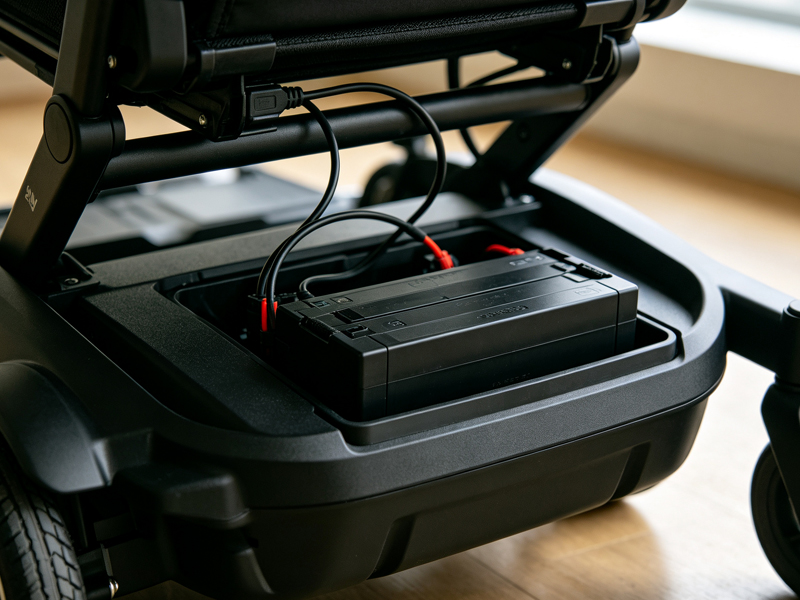
Choosing the right battery is one of the most important decisions when purchasing or upgrading a mobility scooter. Your battery directly affects how far you can travel, how often you need to recharge, how much maintenance is required, and how reliable your scooter will be over time.
Today, lithium-ion batteries are becoming an increasingly popular choice for mobility scooters in the United States. Compared with traditional lead-acid batteries, lithium batteries offer several advantages, including lower weight, faster charging, longer service life, and improved energy efficiency.
But does that mean lithium is always the better option?
we’ll compare lithium and lead-acid mobility scooter batteries, explore their advantages and disadvantages, and help you determine which battery technology best fits your lifestyle and mobility needs.
Before comparing performance, it’s helpful to understand how these two battery technologies work.
Lithium Batteries
Lithium-ion batteries store and release energy through the movement of lithium ions between internal electrodes. They are widely used in modern electric vehicles, portable electronics, and mobility equipment because of their high energy density and relatively low weight.
Many modern mobility scooters use lithium battery systems because they provide dependable power without adding excessive weight to the vehicle.
Lead-Acid Batteries
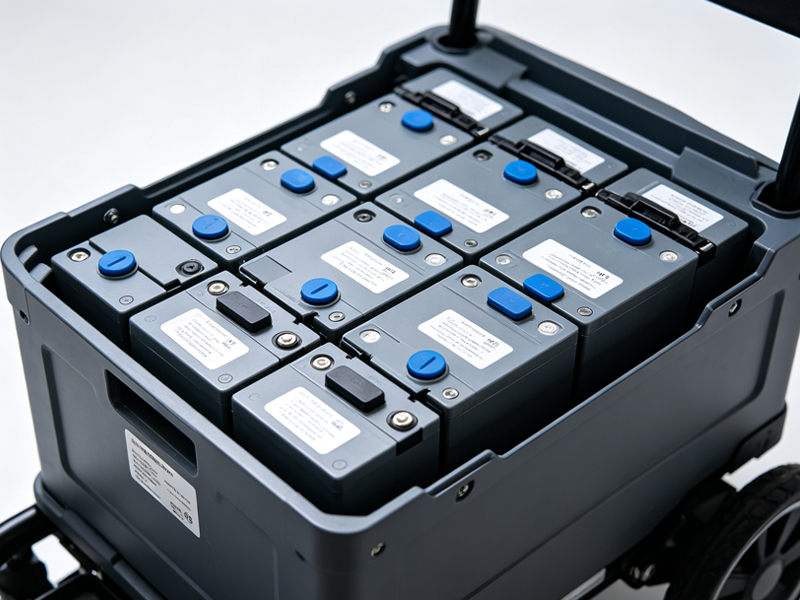
Lead-acid batteries are a traditional rechargeable battery technology that has been used in vehicles and mobility equipment for decades. They are generally less expensive upfront and have a well-established manufacturing history.
However, they are significantly heavier than comparable lithium battery systems and typically require more frequent replacement over their service life.
Both technologies can power a mobility scooter effectively, but their long-term ownership experiences can be quite different.
One of the biggest advantages of lithium batteries is their potential for a longer service life.
Depending on battery chemistry, manufacturing quality, charging habits, and operating conditions, lithium batteries can support significantly more charge cycles than traditional lead-acid batteries.
Many conventional lead-acid batteries offer approximately 300–500 cycles under typical conditions, while some quality lithium battery systems are rated for 1,000–2,000 cycles or more.
A longer service life means fewer battery replacements over the years.
Although lithium batteries generally cost more initially, their longer lifespan can make them a more economical investment over time. When comparing battery costs, consider not only the purchase price but also replacement frequency, maintenance, and the cost of ownership.
Battery weight matters more than many mobility scooter owners realize.
Lead-acid batteries are relatively heavy, which adds considerable weight to the overall scooter. Lithium batteries offer much higher energy density, allowing manufacturers to provide comparable energy capacity in a smaller and lighter package.
This lighter design can provide several benefits:
For users who frequently transport their mobility scooters in a vehicle or have limited storage space, a lightweight lithium battery can make everyday use more convenient.
Nobody wants to wait longer than necessary before heading out for a ride.
Lithium batteries generally accept charging more efficiently than traditional lead-acid batteries. They also tend to maintain a more consistent charging performance throughout the charging process.
Lead-acid batteries typically require a longer absorption stage toward the end of charging. This means the final portion of the charging process can take considerably longer.
With a compatible lithium charger, many lithium battery systems can recharge more quickly, helping users spend less time waiting and more time enjoying their independence.
Charging time varies depending on battery capacity, charger output, battery temperature, and the battery management system.
A mobility scooter needs reliable power to handle everyday activities, from navigating neighborhood sidewalks to traveling through shopping centers and parks.
Lithium batteries generally maintain a more stable voltage during discharge than traditional lead-acid batteries.
This can help provide more consistent performance as the battery gradually loses charge.
Lead-acid batteries may experience more noticeable voltage drops as their charge level decreases, which can affect performance under certain conditions.
For users who depend on their scooters throughout the day, consistent power delivery can be an important advantage.
Another benefit of lithium batteries is their relatively low maintenance requirements.
Many modern lithium mobility scooter batteries are equipped with a Battery Management System (BMS). This electronic system monitors important battery conditions, such as voltage, current, and temperature, and provides protection against certain operating conditions.
Depending on the battery design, the BMS may help prevent:
Lead-acid batteries may require more attention depending on their specific design. For example, some flooded lead-acid batteries require electrolyte level inspections and additional maintenance.
Lithium batteries are generally more convenient for people who prefer a simpler ownership experience.
Although lithium technology offers many benefits, it’s important to understand its limitations before making a purchase.
Lithium battery systems generally cost more upfront than comparable lead-acid options.
However, the initial price doesn’t tell the whole story. A battery that lasts longer and requires fewer replacements may provide better value over several years.
Consider your expected usage, budget, and long-term ownership costs before deciding.
Temperature can influence the performance and lifespan of all rechargeable batteries.
Lithium batteries generally perform well across a range of everyday temperatures, but charging them in extremely cold conditions requires special attention.
Many lithium battery chemistries should not be charged below freezing unless the battery system includes appropriate low-temperature protection or heating.
Charging a lithium battery at an unsuitable temperature can cause permanent damage.
Always follow the manufacturer’s temperature recommendations. A quality Battery Management System can provide additional protection by restricting charging when conditions are unsafe.
Not every mobility scooter is designed to work with every lithium battery.
Battery voltage, capacity, connector type, charger specifications, and communication requirements must all be compatible with the scooter.
Simply replacing a lead-acid battery with a lithium battery of similar physical dimensions does not guarantee safe or reliable operation.
Before upgrading, check your scooter manufacturer’s recommendations or consult a qualified technician.
Lithium batteries are designed with safety features, but they still require proper handling.
Using an incompatible charger, physically damaging the battery, exposing it to extreme heat, or ignoring warning signs can create safety risks.
Always use the recommended charger, inspect the battery regularly, and follow the manufacturer’s storage instructions.
Here’s a simple overview of the differences between these two battery technologies.
| Feature | Lithium Battery | Lead-Acid Battery |
|---|---|---|
| Weight | Lightweight | Heavy |
| Service Life | Generally longer | Generally shorter |
| Charging Speed | Usually faster | Usually slower |
| Energy Density | Higher | Lower |
| Maintenance | Generally low | Varies by type |
| Initial Cost | Higher | Lower |
| Power Delivery | More consistent | Voltage may decline more noticeably |
| Cold-Weather Charging | Requires temperature protection | Also temperature-sensitive |
| Long-Term Value | Often favorable | More frequent replacement may increase costs |
The best choice depends on how frequently you use your mobility scooter, how far you travel, and how much convenience matters to you.
Even a high-quality lithium battery needs proper care. Following a few simple practices can help maintain battery performance and extend its useful service life.
Use the Correct Charger
Always use a charger specifically approved for your battery system. Different battery chemistries and voltage configurations require different charging specifications.
Avoid Extreme Temperatures
Store your scooter in a dry, temperature-controlled environment whenever possible. Avoid charging the battery when it is outside the manufacturer’s recommended temperature range.
Don’t Ignore Battery Warnings
If your scooter displays a battery warning, charging error, or unusual performance issue, investigate the problem instead of continuing to operate the vehicle without checking.
Avoid Long-Term Deep Discharge
Leaving a lithium battery completely discharged for an extended period can contribute to permanent capacity loss. Follow the manufacturer’s recommendations for storage charge levels.
Inspect Your Battery and Connections
Check for visible damage, loose connections, unusual odors, swelling, or excessive heat. Stop using a battery that appears damaged and seek professional assistance.
Follow the Manufacturer’s Storage Guidelines
If you won’t use your scooter for several weeks or months, prepare the battery according to the manufacturer’s storage instructions. Periodically check its condition if recommended.
For many mobility scooter owners, lithium technology offers an excellent combination of convenience, performance, and long-term value.
If you use your scooter regularly for shopping, outdoor activities, neighborhood travel, or daily transportation, a lithium battery can make ownership easier.
Its lighter weight can simplify transportation, its longer potential service life can reduce replacement frequency, and its faster charging capability can help you get back on the road sooner.
On the other hand, a lead-acid battery may still be a reasonable choice for occasional users who prioritize a lower upfront purchase price.
Ultimately, the right battery depends on your mobility requirements, budget, and expectations.
Q1: How long does a lithium mobility scooter battery last?
Battery lifespan depends on chemistry, capacity, charging habits, temperature, and usage. Many lithium battery systems are rated for approximately 1,000–2,000 charge cycles or more, although actual results vary.
Q2: Can I replace my lead-acid mobility scooter battery with lithium?
Possibly, but compatibility must be confirmed first. Check the battery voltage, charger specifications, connector configuration, and scooter manufacturer’s requirements before making the replacement.
Q3: How long does it take to charge a lithium mobility scooter battery?
Charging time depends on battery capacity, charger output, remaining charge, and temperature. Many lithium systems charge faster than comparable lead-acid systems, but you should always follow the manufacturer’s charging recommendations.
Q4: Can I charge my mobility scooter lithium battery overnight?
Some battery systems support extended charging with built-in protection, but you should follow the manufacturer’s instructions. Use the approved charger and avoid leaving a battery connected indefinitely unless the manufacturer specifically permits it.
Q5: Do lithium batteries work in cold weather?
Lithium batteries can operate in cold weather within their specified temperature range, but their available capacity may decrease as temperatures drop. Charging restrictions are especially important in freezing conditions.
Q6: Are lithium mobility scooter batteries safe?
Quality lithium batteries equipped with an appropriate Battery Management System are designed with multiple safety protections. However, correct charging, compatible equipment, proper storage, and regular inspection remain essential.
Your mobility scooter is more than just a vehicle. It’s a tool that helps you stay independent, explore your surroundings, and enjoy everyday activities with greater freedom.
Choosing the right battery can make a meaningful difference in that experience.
While lead-acid batteries remain an affordable traditional option, lithium batteries offer compelling advantages in weight, charging efficiency, potential lifespan, and everyday convenience.
If you’re looking for a dependable battery solution that supports regular use and long-term value, lithium technology is certainly worth considering.
Explore our mobility scooter battery options and find a solution that matches your scooter, lifestyle, and travel needs. With the right battery, you can spend less time worrying about charging and more time enjoying the journey.