Our Location
Free Trade Tower, Xiyong street.
Chongqing, China

Free Trade Tower, Xiyong street.
Chongqing, China
Mobility is not a luxury. For hundreds of millions of people around the world, it is the foundation of independence, dignity, and participation in daily life. Behind every wheelchair is not only a user’s personal story, but also a complex global system of manufacturing, logistics, regulation, and innovation.
As populations age and healthcare systems expand, the global demand for wheelchairs continues to grow steadily. What was once a niche medical device category has evolved into a sophisticated industry involving advanced engineering, international supply chains, and highly specialized distribution networks.
This article explores where wheelchairs are manufactured globally, how they are distributed across regions, what challenges the industry faces, and where the future of mobility equipment is heading.
The wheelchair market reflects some of the most important demographic shifts of our time. Aging societies in North America, Europe, and East Asia are increasing demand for both manual and powered mobility solutions. At the same time, improved survival rates after injuries and illnesses mean more people rely on long-term mobility aids.
Wheelchairs today serve a wide range of users, from elderly individuals needing basic assistance to active users requiring lightweight or sports-oriented designs, and from people with temporary mobility limitations to those who depend on advanced electric or standing wheelchairs for daily independence.
This diversity of needs has pushed the industry beyond simple mass production. Modern wheelchair manufacturing must balance cost efficiency, safety compliance, user comfort, durability, and customization, all while navigating international regulations and logistics.
Although wheelchair users live everywhere, manufacturing is concentrated in a relatively small number of regions. These hubs have developed over time based on industrial capacity, labor availability, regulatory experience, and access to global shipping routes.
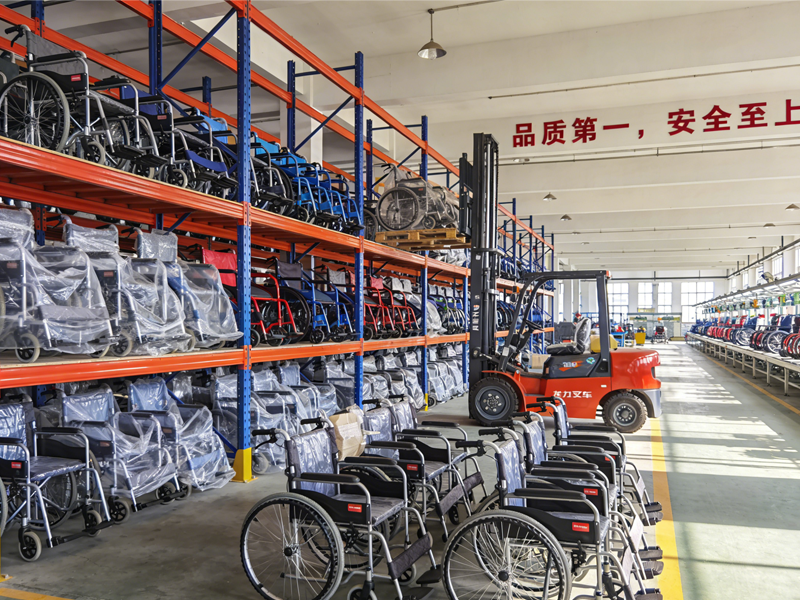
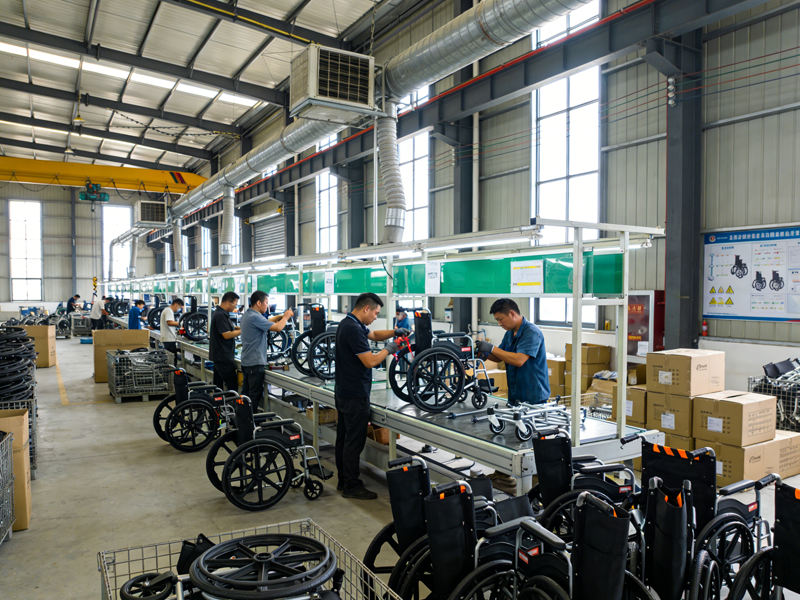
China is widely recognized as the world’s largest wheelchair manufacturing hub. A significant majority of the world’s wheelchairs are produced in Chinese factories, ranging from basic manual models to advanced electric and specialty wheelchairs.
Several factors explain this dominance. China offers large-scale manufacturing infrastructure, mature supply chains for metals, electronics, and batteries, and an experienced export ecosystem. Over decades, specialized industrial clusters have formed in multiple provinces, each focusing on different aspects of wheelchair production, such as frames, motors, control systems, or finished assembly.
Another key strength is flexibility. Many Chinese manufacturers support both OEM and ODM models, allowing international brands and distributors to customize designs, branding, and specifications for their local markets. This adaptability has made China the preferred sourcing destination for companies serving Europe, North America, the Middle East, Africa, and Latin America.
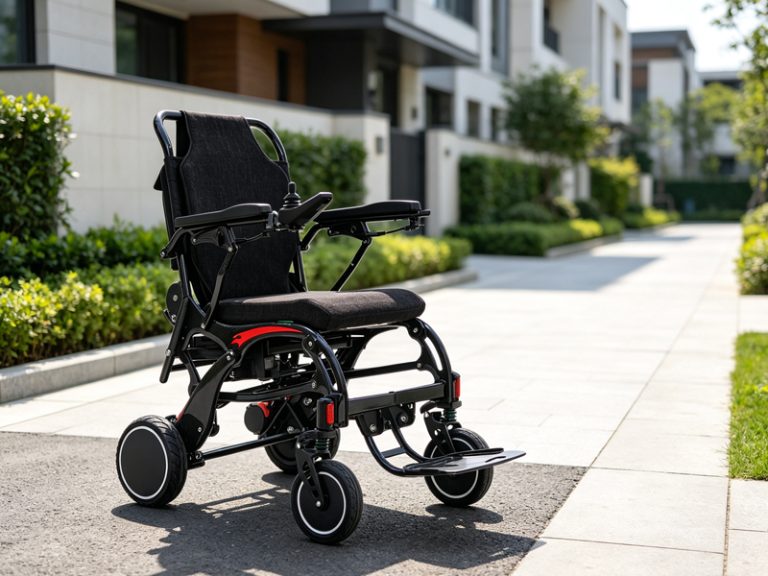
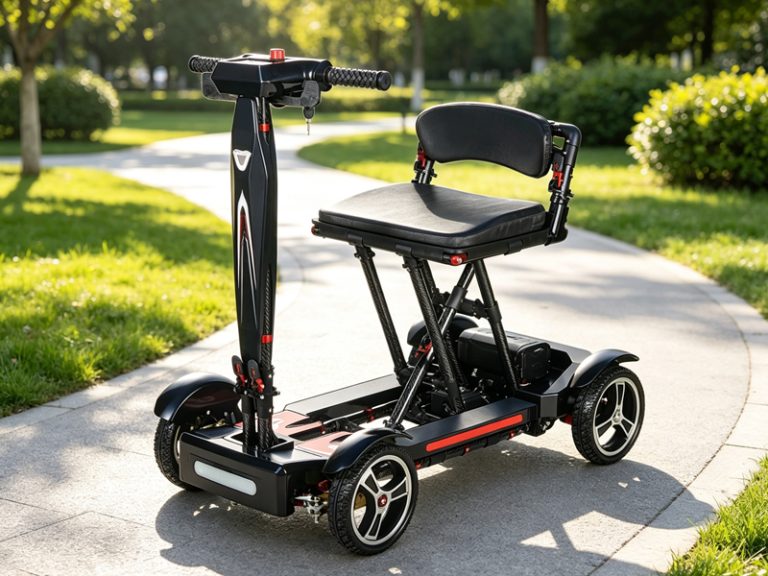
Among these globally focused manufacturers is Iyasocare, headquartered in Chongqing. The company has built its reputation around making reliable mobility products accessible to a broad international audience. Its product range includes manual wheelchairs, electric and off-road models, standing wheelchairs, and mobility attachments. With international certifications and exports to more than 50 countries, Iyasocare represents a new generation of manufacturers that combine large-scale production with global compliance and partnership-oriented distribution.
While China leads in volume, the United States plays a significant role in innovation and premium wheelchair manufacturing. American manufacturers often focus on power wheelchairs, complex seating systems, and highly customized solutions tailored to individual users.
The U.S. market places strong emphasis on ergonomics, advanced electronics, and integration with healthcare reimbursement systems. As a result, many American-made wheelchairs are designed in close collaboration with clinicians and rehabilitation specialists.
Manufacturing volumes are smaller compared to Asia, but U.S. companies often influence global design trends, particularly in the areas of power mobility, user control systems, and comfort-focused engineering.
Germany and other Western European countries have long been associated with precision manufacturing and strict quality standards. In the wheelchair industry, this translates into high-performance products known for durability, ergonomic design, and engineering refinement.
European manufacturers typically focus on premium segments, including lightweight wheelchairs, sports and rehabilitation models, and advanced mobility solutions for complex medical needs. Production costs are higher, but so is the level of customization and quality assurance.
These manufacturers often invest heavily in research and development, contributing to innovations that later influence global markets.
Japan and South Korea occupy important niches in wheelchair manufacturing, particularly where advanced technology meets compact, user-friendly design. Japan’s expertise in robotics and electronics has influenced the development of smart wheelchairs and assistive mobility systems that emphasize autonomy and safety.
South Korea, while smaller in production volume, also contributes through technology-driven designs and electronic integration.
Meanwhile, countries such as India are emerging as competitive producers of standard and low-cost wheelchairs, driven by growing domestic demand and improving manufacturing capabilities. Over time, these regions may play a larger role in regional supply and localized production.
Most wheelchairs produced in major hubs are exported internationally. This requires well-developed logistics systems capable of handling bulky products, sensitive components, and, in the case of electric wheelchairs, lithium batteries.
Shipping methods vary depending on urgency, cost, and destination. Large distributors often rely on sea freight for container shipments, while air freight is used for high-value or time-sensitive orders. Packaging, documentation, and compliance with transport regulations are critical to avoid delays or damage.
Manufacturers with experience in global logistics are better positioned to support international distributors and end users.
In most markets, wheelchairs reach users through local distributors, dealers, or healthcare providers. These partners play an essential role by offering product selection guidance, fitting services, maintenance, and after-sales support.
In developed markets, distributors often work closely with insurance systems and healthcare institutions. In developing regions, partnerships with NGOs, charities, and public health programs help extend mobility access to underserved populations.
Iyasocare’s global approach emphasizes cooperation with regional partners, allowing products to be adapted to local needs while maintaining consistent quality standards.
Despite steady growth, the industry faces several ongoing challenges that affect both manufacturers and distributors.
One major issue is regulatory complexity. Wheelchairs are classified as medical devices in many countries, requiring compliance with different safety, quality, and testing standards. Navigating these requirements adds cost and complexity, particularly for companies operating across multiple regions.
Supply chain stability is another concern. Fluctuations in raw material prices, electronic component shortages, and transportation disruptions can all impact production schedules and pricing.
Affordability remains a critical challenge as well. While high-end wheelchairs continue to advance technologically, many users around the world still lack access to basic, reliable mobility equipment. Bridging this gap requires innovation not only in design, but also in manufacturing efficiency and distribution models.
The future of wheelchair manufacturing is increasingly driven by technology and user-centered design.
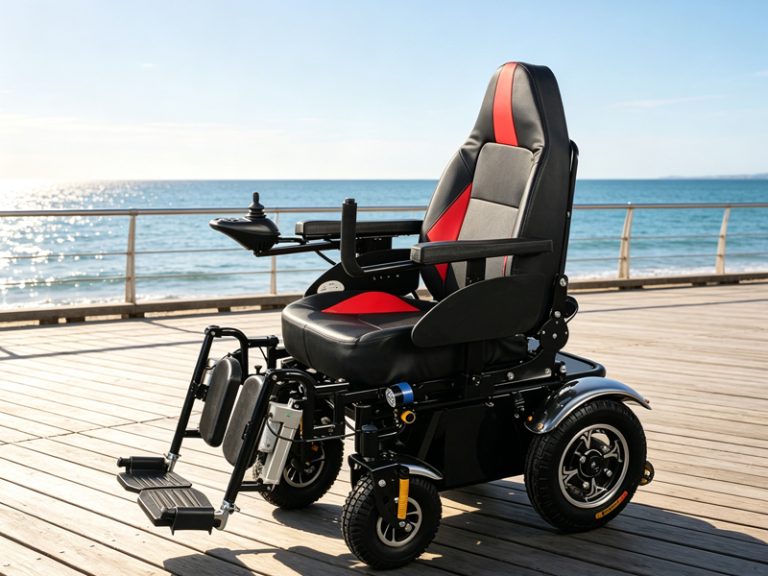
Electric and power wheelchairs are becoming more capable, with improved battery life, better terrain handling, and enhanced comfort. Smart features such as obstacle detection, connectivity, and adaptive controls are gradually entering the market.
Customization is another major trend. Modular designs and advanced manufacturing techniques allow wheelchairs to be tailored to individual body types and usage scenarios, improving long-term comfort and health outcomes.
Sustainability is also gaining attention, with manufacturers exploring lighter materials, recyclable components, and more efficient production processes.
In this evolving landscape, companies like Iyasocare demonstrate how manufacturing scale and global distribution can be aligned with accessibility goals. By offering a wide range of wheelchair types and supporting international partners, the brand helps reduce barriers to mobility across diverse markets.
Its focus on international certification, product diversity, and cost-effective manufacturing enables distributors and end users to access dependable mobility solutions without compromising safety or usability.
As global demand continues to rise, such models are likely to become increasingly important in ensuring that mobility products reach those who need them most.
1. Why is wheelchair manufacturing concentrated in a few regions?
Because wheelchair production requires specialized supply chains, regulatory experience, and export infrastructure. Regions that developed these capabilities early continue to dominate due to efficiency and scale advantages.
2. What makes international wheelchair distribution challenging?
The combination of medical regulations, logistics constraints, battery transport rules, and the need for local service support makes cross-border distribution more complex than standard consumer goods.
3. How do global manufacturers improve accessibility worldwide?
By combining large-scale production, international compliance, flexible partnerships, and cost-efficient design, global manufacturers help bring mobility solutions to more users across different economic and geographic contexts.
The global wheelchair industry is not just about products — it is about people. Behind every manufacturing hub and distribution network is a shared goal: enabling movement, independence, and participation in life.
As technology advances and global cooperation deepens, the way wheelchairs are made and distributed will continue to evolve. Understanding this ecosystem helps us appreciate both the industrial complexity and the human impact of mobility solutions in a connected world.