Our Location
Free Trade Tower, Xiyong street.
Chongqing, China

Free Trade Tower, Xiyong street.
Chongqing, China
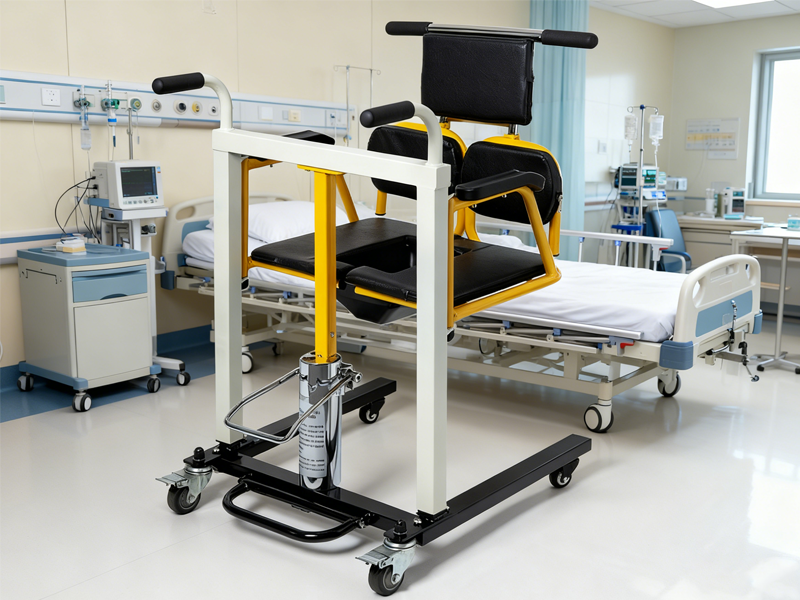
Mobility equipment has quietly transformed in the last decade. What used to be a market dominated by basic wheelchairs and bulky lifts has evolved into a sophisticated ecosystem of assistive solutions driven by engineering innovation, aging-in-place demands, and a renewed focus on dignity and independence for people with mobility limitations.
Whether you are a family caregiver navigating mobility support for the first time, a clinician updating recommendations, or simply a user looking to improve everyday quality of life, the landscape can be overwhelming. The choices feel endless—manual wheelchairs, electric wheelchairs, transfer chairs, stand-assist devices, smart lifting systems, and a growing category of hybrid devices.
But behind the complexity lies a simple truth:
The best mobility equipment is the kind that reduces strain, increases freedom, and supports the user’s life—not the other way around.
This article walks through the modern world of mobility equipment with clarity and practicality, while also highlighting a few standout solutions that represent where the industry is heading. Expect a detailed deep dive, expert insight, and real-world guidance rather than sales language or generic summaries.
A generation ago, mobility support mainly fit into two categories:
Wheelchairs
Patient lifts
Today, mobility limitations vary widely due to changing lifestyles, longer lifespans, more complex medical conditions, and higher expectations about living independently. As a result, mobility solutions have diversified.
People are now looking for equipment that can handle:
Daily short-distance transfers (bed ↔ wheelchair, wheelchair ↔ toilet, wheelchair ↔ car)
Long-term mobility indoors and outdoors
Safe handling for overweight or elderly users
Caregiver strain reduction
Improved stability and injury prevention
Better portability for travel and home use
And perhaps the most important factor:
Mobility equipment must now be intuitive and non-intimidating.
The rise of home healthcare has shifted responsibility from trained clinical staff to family caregivers who often have little experience with lifting, transfers, or positioning. Modern devices must accommodate this shift.
When people think of mobility, they picture moving from one place to another. But the real difficulty often lies in the micro-mobility moments—getting up, sitting down, repositioning, or moving between surfaces.
More than 70% of mobility-related injuries for caregivers occur during transfers.
For users, unsuccessful transfers are a leading cause of falls and hospitalizations.
That is why transfer mobility equipment has recently become one of the fastest-growing categories in the industry.
A well-designed transfer tool should:
Support weight evenly without causing compression
Lock securely and minimize wobble
Allow one-person operation without excessive physical effort
Be safe for the user and the caregiver
Fit into home environments (tight bathrooms, narrow doorways)
Be simple enough for daily use
Among the innovations in this category, hydraulic transfer chairs, electric lifting chairs, and compact transfer wheelchairs have stood out as practical solutions that bridge functionality and user comfort.
This brings us to a few real-world examples.
Below are three models that exemplify the direction the industry is moving—devices engineered not just for movement, but for safety, comfort, and independent living. Each has a distinct purpose, and each reflects an evolution from traditional mobility products.
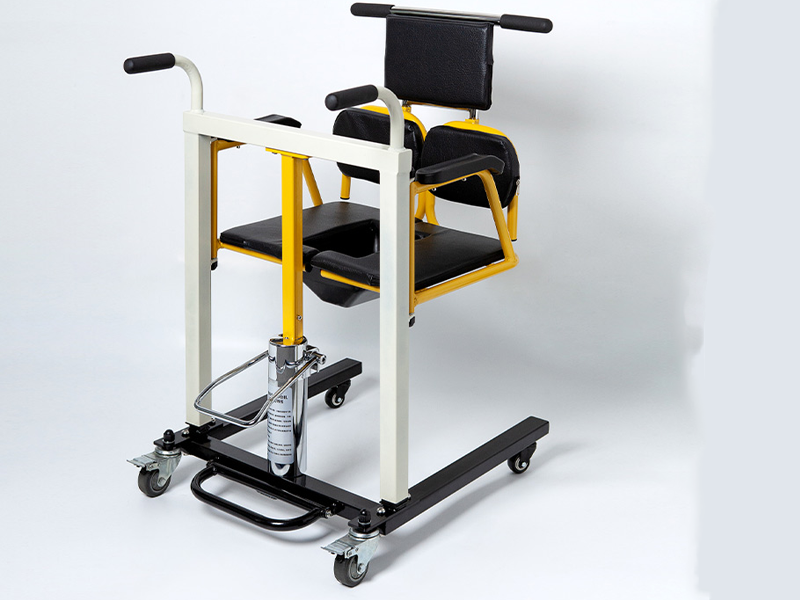
The YSM2304 represents a category of mobility equipment that has become essential in both home and clinical settings: manual hydraulic lifting chairs. This model offers an efficient balance between affordability and functionality, making it suitable for families who need a lift but don’t require a fully electric system.
Where this device excels:
Smooth hydraulic lifting allows a single caregiver to perform a safe vertical lift without excessive effort.
Great for bathroom or bedroom transfers, especially where a full-size lift won’t fit.
Wider application range—use it for wheelchairs, toilets, bedside transfers, or short-distance indoor movement.
More budget-friendly compared to electric lifts.
Users with moderate mobility limitations can benefit significantly from hydraulic chairs. They offer dignity and stability without the complexity of high-tech devices.
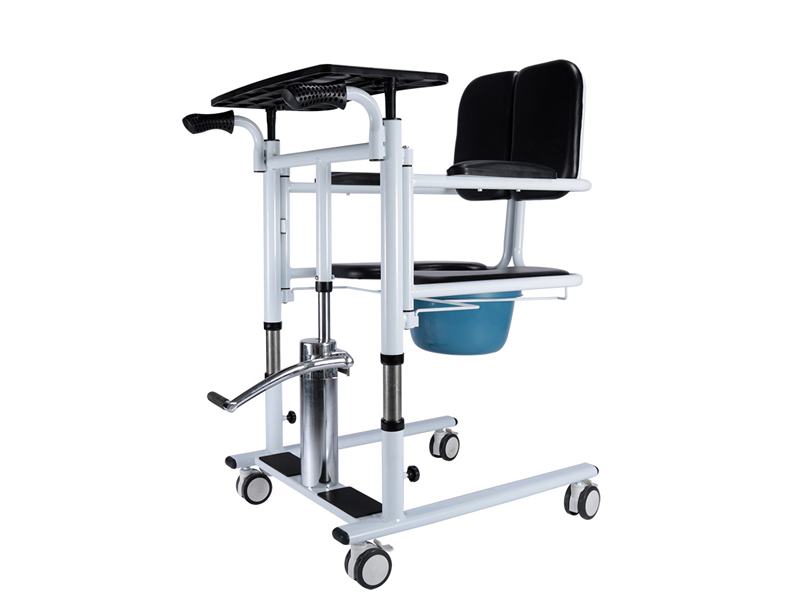
The YSM2305 is a more advanced solution that integrates powered lifting technology, making it ideal for environments where transfers must be frequent, safe, and efficient.
This model fits into the modern trend of electromechanical assistance—devices that reduce strain and error while improving safety.
Notable advantages include:
Electric lifting system reduces caregiver burden dramatically.
Higher precision height adjustment, ideal for beds, toilets, and recliners.
Excellent support for elderly users who need steady, controlled lifting.
Better for long-term care environments (hospitals, assisted living, rehabilitation facilities).
For users with significant mobility restrictions or caregivers who need consistent daily assistance, an electric lifting wheelchair like the YSM2305 sets a new standard for safe home care.
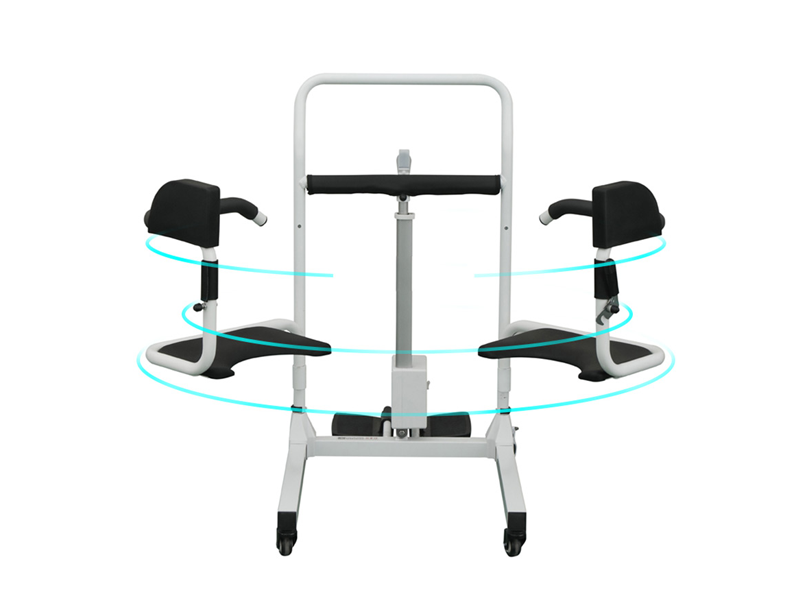
Unlike the first two models, the YSM2302 focuses on practical lateral transfers and mobility within small spaces. It is lightweight, efficient, and highly maneuverable—designed for real-world home layouts where turning circles can be tight.
Key highlights:
Compact frame fits narrow doorways—a critical issue in many homes.
Designed for lateral transfers, reducing the need for vertical lifting.
User-friendly design makes it ideal for everyday use.
Highly portable—easy to move, clean, and store.
This model is perfect for individuals who still have some sitting stability but need help shifting between surfaces. It’s a smart replacement for outdated commode chairs and unstable improvised transfer methods.
Mobility devices are not one-size-fits-all. The wrong type of equipment can cause injury, strain, or simply go unused because it feels too complicated.
Below is a practical framework used in real clinical and home-care assessments.
Ask these questions:
Can the user sit upright without support?
Can they put weight on their legs?
Do they get dizzy when transitioning?
Is their upper body strength limited?
This determines whether they need a transfer wheelchair, lifting chair, or full support lift.
Many caregivers underestimate how physically demanding transfers can be.
If the caregiver is elderly or has back problems, electric solutions (like the YSM2305) are safer long-term.
Map out the essential movements:
Bed → Wheelchair
Wheelchair → Toilet
Wheelchair → Shower
Wheelchair → Car
Sitting → Standing
Some users only need short-distance transfers. Others need multiple transfers per day. Equipment should fit actual lifestyle needs, not idealized ones.
Measure:
Door widths
Bathroom space
Bed height
Toilet height
Floor type
For tight environments, something compact like the YSM2302 may be more practical than a larger hydraulic or electric lift.
A good device is not a temporary bandaid—it should last years.
Look for:
Reinforced frames
Quality wheels
Corrosion-resistant parts
High-quality hydraulic or electric systems
Saving money upfront but sacrificing durability often leads to repeat purchases and greater cost.
Mobility equipment must support physical needs, but it should also preserve autonomy and dignity.
Devices that feel comfortable, secure, and simple to use encourage independence and reduce frustration—both for the user and the caregiver.
Lower caregiver injury risk
Reduction in user falls
Better hygiene and daily care efficiency
Greater independence for the user
Improved mental well-being
Higher rehabilitation success rates
Better long-term mobility preservation
The transition to modern equipment is not just a lifestyle upgrade—it’s a preventive measure that protects both user and caregiver.
Mobility limitations shouldn’t define a person’s life. With the right equipment, challenges become manageable, caregiving becomes safer, and daily activities become possible again.
Whether you need a hydraulic system like the YSM2304, an electric lifting chair such as the YSM2305, or a compact transfer solution like the YSM2302, each represents a step forward in how we approach mobility with intelligence and compassion.
The goal is not merely movement—it is freedom, safety, and dignity.
A: An electric lifting transfer wheelchair, such as the YSM2305, is ideal. It handles the lifting automatically, reducing caregiver strain and preventing injuries during daily transfers.
A: Choose hydraulic (like YSM2304) if you want an affordable, reliable system for moderate transfer needs. Choose electric (like YSM2305) if the user is heavier, transfers are frequent, or the caregiver cannot perform manual lifting.
A: A compact transfer wheelchair, such as the YSM2302, is the most suitable choice. Its narrow frame and maneuverability make it ideal for small apartments, older homes, or tight restroom layouts.