Our Location
Free Trade Tower, Xiyong street.
Chongqing, China

Free Trade Tower, Xiyong street.
Chongqing, China
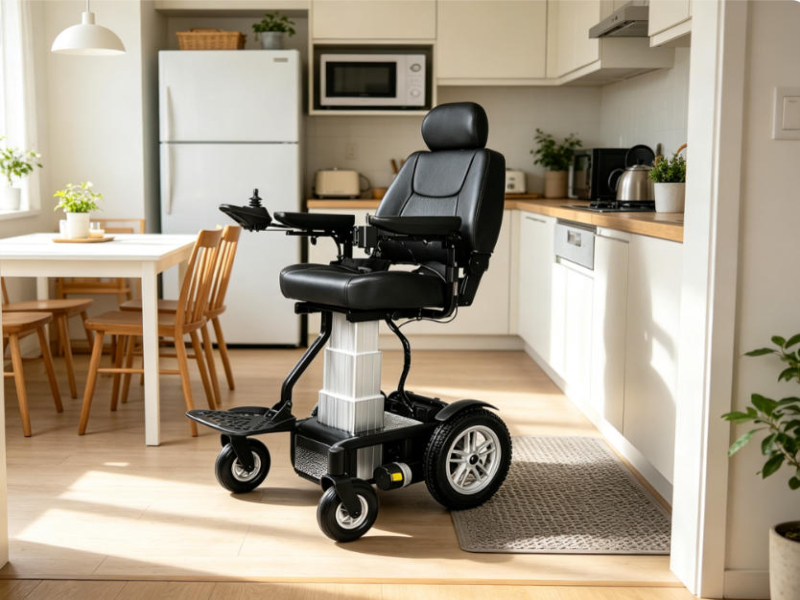
For many wheelchair users, accessibility is not simply about getting from one place to another. The real challenge often begins when a standard wheelchair does not match the height of a table, kitchen counter, bed, vehicle seat, or transfer surface. A fixed-height wheelchair can provide reliable transportation, but it may still leave the user dependent on another person when reaching, transferring, or interacting with the surrounding environment.
Table of Contents
ToggleThis is where a Wheelchair Lift for Disabled users can make a meaningful difference. An Accessible Lift Wheelchair combines powered mobility with adjustable seating or lifting functionality, allowing the user to change position while remaining in the chair. Instead of treating mobility and accessibility as separate problems, this type of wheelchair brings them together in one practical solution.
For seniors, people with disabilities, rehabilitation users, and individuals with limited lower-body strength, the ability to raise or lower the seating position can support greater independence in everyday activities. It can also make certain transfers more manageable and reduce the need for caregivers to repeatedly reposition the user.
However, choosing a lift wheelchair should involve more than looking for the word “lift” in a product description. Seat adjustment, driving performance, frame construction, battery capacity, braking, folding capability, user weight, terrain requirements, and overall ergonomics all need to be considered.
A conventional wheelchair keeps the user at a relatively fixed height. That works well for many forms of transportation, but everyday life rarely happens at one fixed height.
A dining table may be higher than the wheelchair seat. A kitchen worktop may be difficult to reach. A reception desk may be designed for standing adults. A transfer to a bed or another chair may require careful positioning. Even communicating with someone who is standing can become uncomfortable when there is a significant difference in eye level.
A Wheelchair Lift for Disabled users addresses some of these challenges by allowing the seat to move vertically. Instead of asking the user to adapt to every environment, the wheelchair can adapt to the user’s surroundings.
This is particularly relevant for people who want to remain active outside the home. Going shopping, attending a social event, visiting a restaurant, working at a desk, or participating in family activities can involve many different seating and surface heights.
A lift function can therefore provide more than physical convenience. It can support participation.
An Accessible Lift Wheelchair may also reduce reliance on caregivers for certain everyday tasks. For example, a user who can safely operate the seat-height control may be able to position themselves at an appropriate height for a table or counter without asking another person to physically reposition them.
Of course, powered lifting does not eliminate the need for appropriate transfer techniques or professional assessment. Users should always follow the manufacturer’s operating instructions and consider their individual physical capabilities before using the lift function.
A standard electric wheelchair primarily provides powered movement. The user controls direction and speed through a joystick or similar controller, while the seat remains largely fixed.
An Accessible Lift Wheelchair adds another dimension: powered positioning.
The chair may allow the user to raise or lower the seating platform, depending on the model. Some advanced mobility chairs may combine this with reclining, footrest adjustment, tilt, or other positioning functions.
The practical benefits can include:
The important distinction is that “lift” does not necessarily mean the same thing on every wheelchair. Some models focus primarily on vertical seat-height adjustment, while others combine lifting with rehabilitation or positioning functions.
For customers specifically searching for an Accessible Lift Wheelchair, the YSE314 is one of the most directly relevant models in the IYASOCARE range.
Its defining feature is the electrically adjustable seat. Instead of remaining at one fixed height, the user can adjust the seating position through the powered mechanism. This can be useful when approaching tables, desks, counters, beds, and other surfaces at different heights.
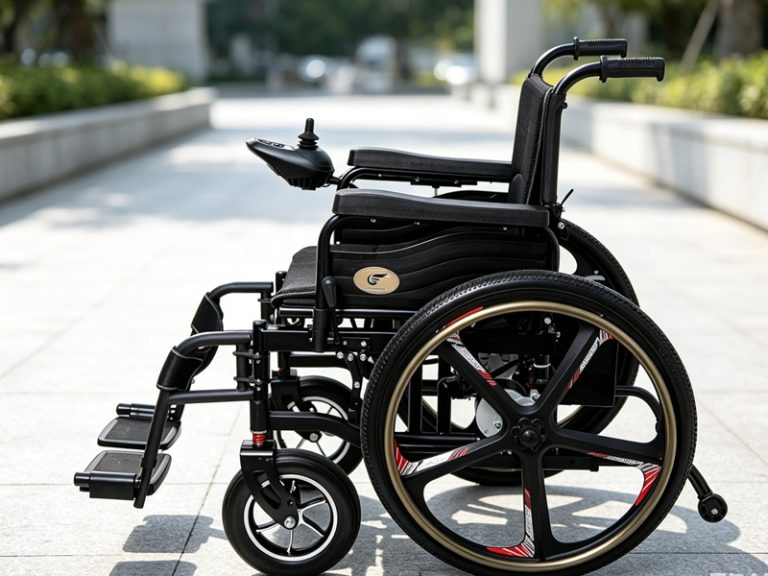
The YSE314 is particularly interesting because it combines this functionality with a folding electric wheelchair structure. According to IYASOCARE’s published product information, the model uses dual 24V 180W motors, a 20Ah lithium battery, electromagnetic braking, and a maximum speed of approximately 6 km/h. Its published driving range is around 15 km, while its climbing capability is approximately 12°.
The folding structure is another practical advantage. Powered wheelchairs can become difficult to transport because of their size and weight, so a folding design can make a considerable difference for families who regularly use a vehicle.
The published folded dimensions are approximately 75 × 59 × 69 cm, making the YSE314 more manageable for storage and transportation than many rigid-frame power wheelchairs. Its steel frame is listed with a load capacity of approximately 125 kg.
Where the YSE314 makes the most sense
The YSE314 is particularly suitable for users who want lift functionality but still need a relatively practical everyday electric wheelchair.
It can be considered for:
For a customer whose primary requirement is “I want an electric wheelchair that can change height,” the YSE314 should be one of the first models to examine.
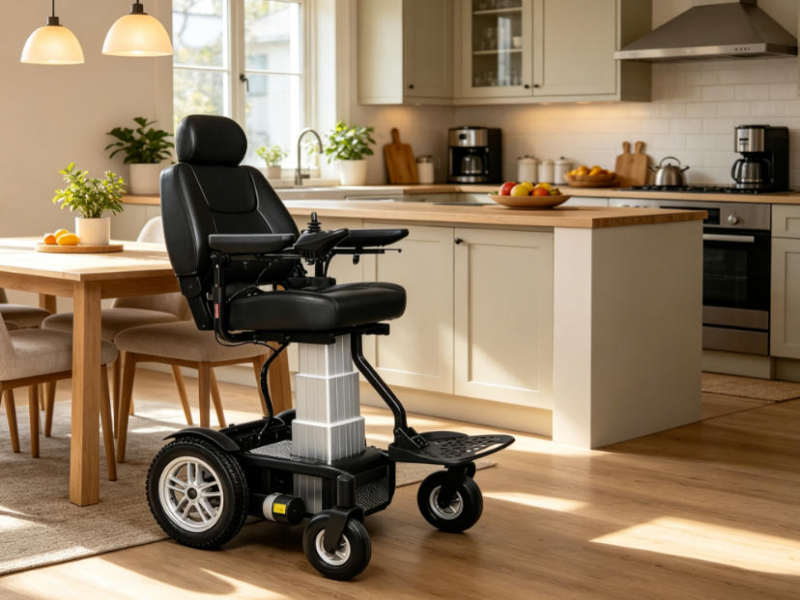
The YSE134 takes the concept in another direction. Rather than focusing primarily on portability, it combines adjustable seating with stronger outdoor capability.
This makes it particularly interesting for users who want an Accessible Lift Wheelchair that can move beyond smooth indoor floors.
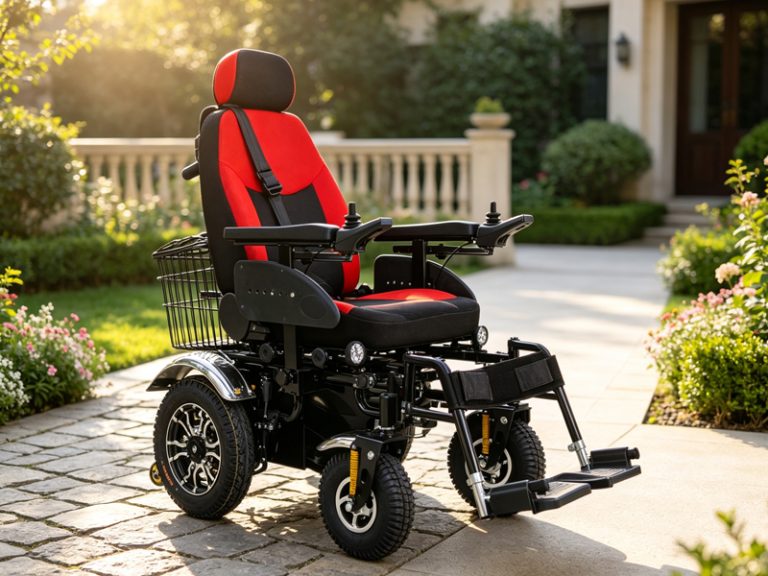
The YSE134 is built around an aluminum frame and large off-road wheels. Its published specifications include 12-inch rear wheels, 8-inch front wheels, a climbing ability of approximately 15°, and an obstacle-crossing height of up to 80 mm. Its maximum speed is listed at 6 km/h.
These specifications make the model more suitable for users who regularly encounter uneven pavement, garden paths, parks, community areas, ramps, and other outdoor surfaces.
The adjustable seating system is one of its strongest features. The published product information describes an electric seat adjustment of up to 45 degrees, a backrest reclining range of up to 160 degrees, a footrest adjustment of up to 70 degrees, and a 360-degree rotating seat.
These functions give the YSE134 a broader positioning capability than a basic electric wheelchair.
The rotating seat is particularly interesting from an accessibility perspective. Being able to change the direction of the seat can make certain transfers and positioning situations more convenient, although users should always assess the specific transfer environment and follow the manufacturer’s instructions.
Battery and outdoor performance
Battery capacity is especially important for an outdoor Wheelchair Lift for Disabled users because additional motorised functions and uneven terrain can increase energy consumption.
The YSE134 is offered with 24V 15Ah or 30Ah lithium battery configurations. IYASOCARE states an approximate driving range of 20–40 km depending on configuration and conditions, with a charging time of around 4–6 hours.
Its electromagnetic brake system is designed to automatically engage when the joystick is released. The published braking distance is listed as no more than 800 mm.
For users who want one wheelchair capable of supporting both everyday mobility and outdoor activities, this combination can be particularly attractive.
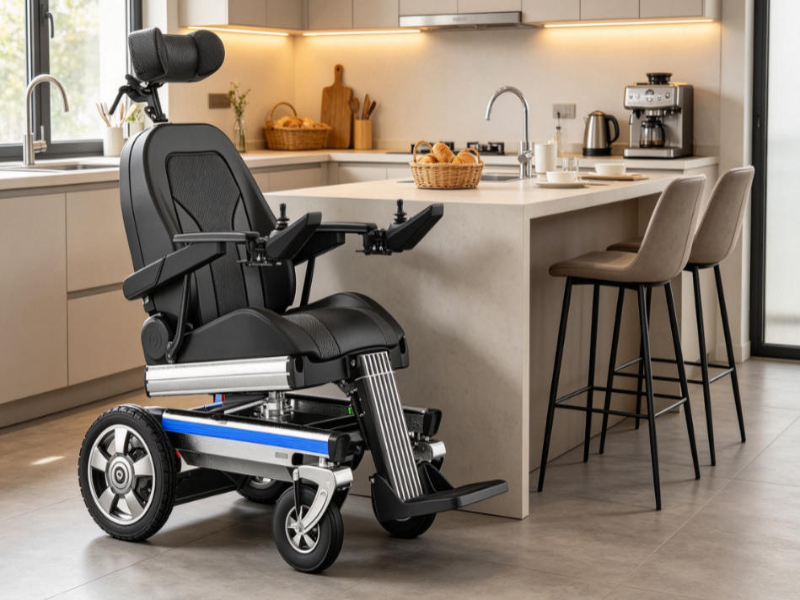
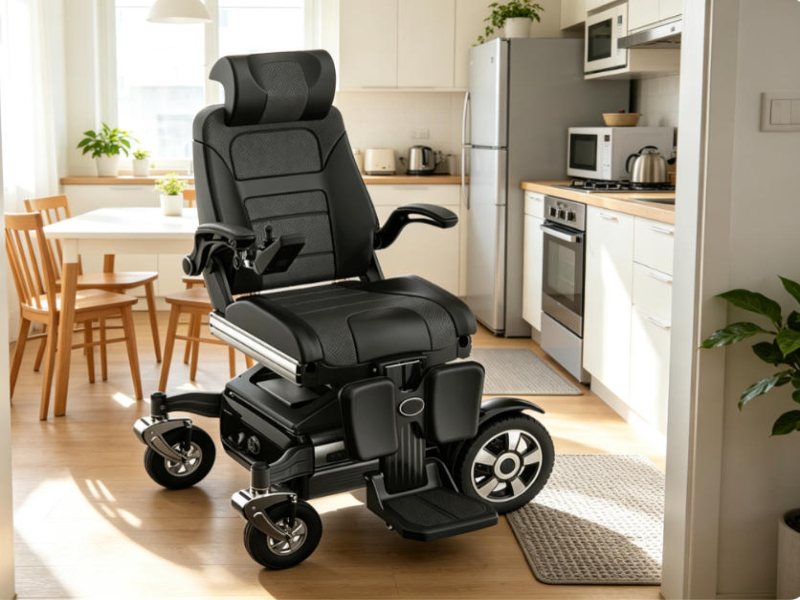
The YSE313 belongs to the rehabilitation-oriented side of the mobility market. This makes it relevant for buyers who are not simply looking for transportation but are considering a wheelchair as part of a broader rehabilitation or care environment.
An electric rehabilitation wheelchair may be used in settings where positioning, comfort, controlled mobility, and user support are especially important.
For rehabilitation centres, hospitals, nursing environments, and professional caregivers, the selection process can therefore be different from that of a private consumer. The chair may need to accommodate repeated daily use, different users, caregiver handling, and structured mobility routines.
The YSE313 should therefore be evaluated according to the precise rehabilitation requirements of the intended user and the manufacturer’s current technical documentation.
This distinction is important because an Accessible Lift Wheelchair is not necessarily about one feature alone. Accessibility can involve seating position, controlled movement, transfers, posture, reach, and interaction with the environment.
Independence does not always mean doing everything without assistance. In mobility care, independence often means having more control over when assistance is needed.
A powered lift can give users greater control over their seating height. Instead of waiting for a caregiver to reposition the chair, the user may be able to make appropriate adjustments themselves.
Consider a typical day.
A user starts the morning at home and needs to position the chair beside a bed. Later, they move to the dining area and need to sit comfortably at the table. After breakfast, they may travel to a clinic or shopping centre. During the afternoon, they may spend time outdoors before returning home.
Each environment presents different requirements.
A fixed-height wheelchair can manage the movement between locations, but the seating position remains largely unchanged. An Accessible Lift Wheelchair can provide an additional layer of adaptability.
That adaptability can be especially meaningful for people who want to continue making everyday choices independently.
It is easy to focus entirely on the lifting function when buying a lift wheelchair. However, the lift mechanism is only one part of the complete mobility system.
A high-quality wheelchair also needs appropriate:
Seat dimensions
Seat width, depth, and height must correspond to the user’s body dimensions. An incorrectly sized chair can reduce comfort and positioning stability.
Driving controls
The joystick should be easy for the user to operate. People with reduced hand strength or coordination may need particularly simple controls.
Braking
Electromagnetic braking can provide automatic stopping when the control is released, depending on the wheelchair’s design.
Battery system
The battery should provide sufficient range for the user’s normal routine while remaining practical for charging and transportation.
Frame construction
The frame must support the user’s weight and withstand repeated everyday use.
Foot and leg support
Adjustable footrests can help users maintain a more appropriate seated posture.
Portability
For users who frequently travel by car, folding or modular construction can make a major difference.
A lift wheelchair should therefore be judged as a complete mobility solution rather than simply as a chair with a motorised lifting mechanism.
Not every wheelchair user needs a lifting function.
If a user mainly needs powered transportation around the home and local community, a conventional electric wheelchair may be sufficient.
However, an Accessible Lift Wheelchair becomes more attractive when the user regularly experiences difficulties related to seating height.
Ask the following questions:
Does the user struggle to reach tables or counters?
If yes, adjustable seating may be valuable.
Does the user frequently need to position the chair beside different transfer surfaces?
If yes, height adjustment can potentially make positioning more convenient.
Does the user want greater interaction with people at standing height?
If yes, changing the seating height may improve social interaction.
Does the user spend significant time outdoors?
If yes, a model such as the YSE134 may be more appropriate than a purely indoor-focused lift chair.
Is vehicle transportation important?
If yes, the folding YSE314 may deserve particular consideration.
The answers to these questions can help narrow the selection considerably.
For caregivers, a Wheelchair Lift for Disabled users can provide useful assistance, but it should not be treated as a substitute for proper transfer assessment.
Before purchase, caregivers should consider the user’s ability to maintain balance, operate controls, understand the lifting process, and remain safely positioned during adjustment.
The surrounding environment matters as well. The lift should only be operated where there is sufficient clearance above and around the wheelchair. Objects such as cabinets, shelves, door frames, overhead fixtures, or table structures may interfere with movement.
Caregivers should also understand the wheelchair’s maximum operating limits and follow the manufacturer’s instructions regarding seat height, slopes, battery charging, braking, and maintenance.
For professional care environments, staff training can be just as important as the wheelchair itself.
Rehabilitation is often about helping people regain as much functional independence as possible.
A wheelchair with adjustable seating can support this process by providing different positioning options during daily activities. The user may be able to practise certain movements or interact with surfaces at different heights while remaining securely seated.
The exact rehabilitation benefits depend heavily on the user’s condition and professional treatment plan, so the wheelchair should not be considered a medical treatment by itself.
Nevertheless, an adjustable electric mobility platform can be useful within a broader rehabilitation environment because it provides controlled positioning and powered movement.
This is one reason the YSE313 is worth considering alongside lift-focused models such as the YSE314 and the more outdoor-oriented YSE134.
For distributors, hospitals, rehabilitation centres, and mobility equipment dealers, product selection is rarely limited to one wheelchair.
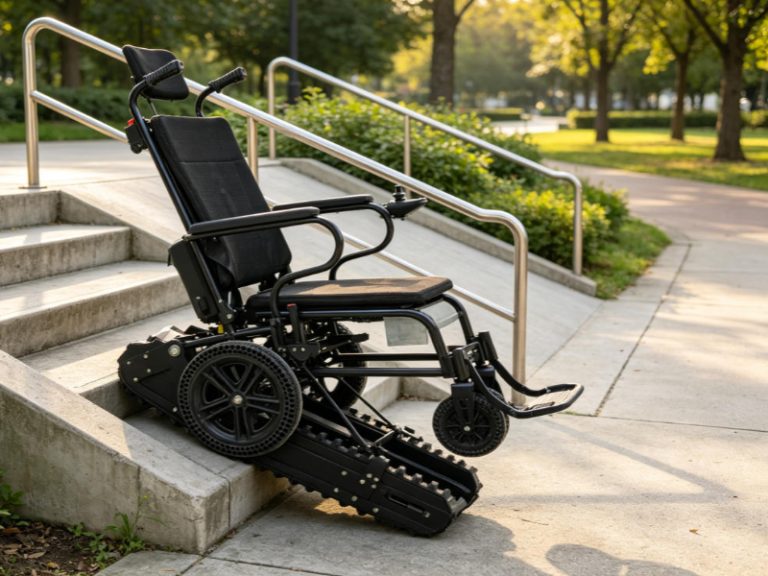
Different users need different solutions. One customer may need a lightweight manual wheelchair, another may need a folding electric wheelchair, while another may specifically require a standing, stair-climbing, rehabilitation, or lift wheelchair.
IYASOCARE’s product range covers multiple categories, including electric wheelchairs, manual wheelchairs, standing wheelchairs, children’s wheelchairs, transfer wheelchairs, and specialised mobility products. Its official website currently lists more than 100 products across its broader range.
The company states that it focuses on research, development, production, sales, and consulting for medical and rehabilitation equipment, and its website presents factory-oriented supply and inspection services for international customers.
For B2B buyers, this broader portfolio can be useful when developing a mobility product line because different customer groups can be served through different wheelchair configurations.
A Wheelchair Lift for Disabled users can represent an important step toward more adaptable personal mobility. Instead of keeping users at one fixed height, an Accessible Lift Wheelchair can allow seating position to change according to the surrounding environment.
For users who need practical height adjustment combined with portability, the YSE314 Height-Adjustable Folding Electric Wheelchair is a particularly relevant option. Its powered lift, folding structure, lithium battery, electromagnetic braking, and everyday electric drive make it a strong candidate for home, community, and travel-oriented use.
For users who want adjustable seating together with stronger outdoor capability, the YSE134 Electric Off-Road Wheelchair offers a broader mobility package, including large wheels, climbing capability, adjustable seating, reclining, footrest adjustment, and a lithium battery system.
For rehabilitation-oriented environments, the YSE313 Electric Rehabilitation Wheelchair provides another category to investigate when positioning, care, and controlled powered mobility are central to the user’s needs.
Ultimately, accessibility should not be defined only by whether a building has a ramp or elevator. Personal mobility equipment also plays a major role in determining how freely a person can interact with their environment.
The right Accessible Lift Wheelchair can help bridge the gap between the user’s seated position and the world around them—from dining tables and desks to beds, counters, public spaces, and outdoor environments. When selected carefully and used according to the manufacturer’s instructions, lift-enabled mobility can provide greater flexibility, comfort, and control in everyday life.
For international distributors and mobility equipment buyers, the opportunity is equally clear: the market is moving toward wheelchair designs that do more than transport users. Modern mobility solutions increasingly combine powered movement, positioning, comfort, portability, rehabilitation support, and accessibility in one platform.
That is the direction in which the next generation of wheelchair design is heading.
1. What is an Accessible Lift Wheelchair?
An Accessible Lift Wheelchair is a powered wheelchair that incorporates an electrically adjustable seating or lifting function. Depending on the model, the lift can help users change their seating height to interact with tables and counters, improve positioning, or make certain transfers more convenient. The exact lift function and operating limits vary by model.
2. Who can benefit from a Wheelchair Lift for Disabled users?
A Wheelchair Lift for Disabled users can be particularly useful for people who have difficulty reaching different surface heights, need greater positioning flexibility, or want more independence when interacting with their environment. Seniors, people with mobility limitations, rehabilitation users, and some caregivers may find lift-enabled wheelchairs valuable. Individual suitability should be assessed according to the user’s physical abilities and the manufacturer’s specifications.
3. Which IYASOCARE model should I choose?
It depends on the primary use. The YSE314 is a strong option for users who prioritise electric height adjustment, folding portability, and everyday mobility. The YSE134 is more appropriate for users who want adjustable seating combined with stronger outdoor and off-road performance. The YSE313 should be considered when rehabilitation and professional care requirements are central to the purchase. Buyers should compare seat dimensions, weight capacity, battery range, terrain requirements, lift functions, portability, and user needs before making a final decision.
WhatsApp us