Our Location
Free Trade Tower, Xiyong street.
Chongqing, China

Free Trade Tower, Xiyong street.
Chongqing, China
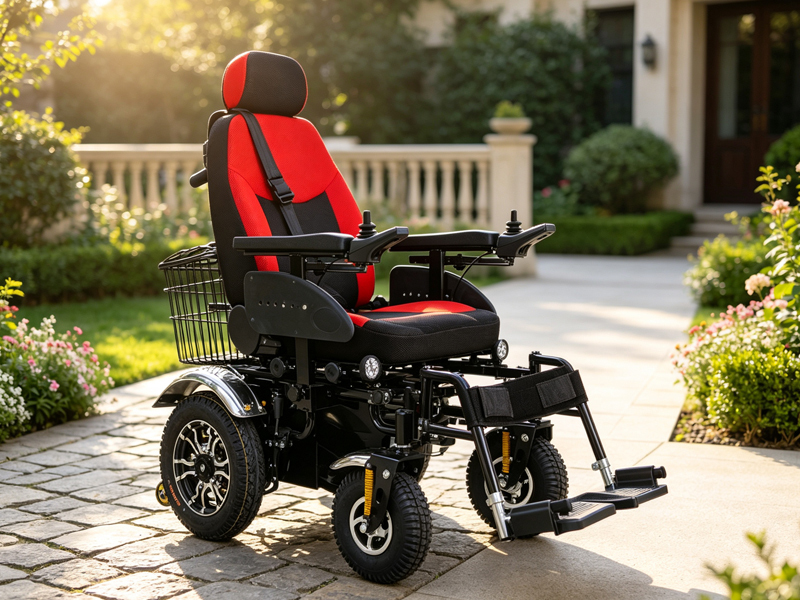
Choosing the right wheelchair tires can make a surprisingly big difference to everyday mobility.
For someone who mainly uses a wheelchair indoors, tire selection may seem straightforward. Smooth floors, elevators, ramps, and paved hallways do not usually demand much from a tire. But once a wheelchair is taken onto grass, gravel, dirt paths, uneven sidewalks, park trails, or other outdoor surfaces, the limitations of a standard tire quickly become noticeable.
That is where all-terrain wheelchair tires come in.
The right all-terrain tire can provide better traction, improve stability, make uneven surfaces more manageable, and create a more comfortable riding experience. The wrong one, however, may add unnecessary weight, increase rolling resistance, wear quickly, or simply fail to perform in the environments where you need it most.
So how do you choose?
The answer is not simply “buy the tire with the deepest tread.” Wheelchair tire selection is a balance between traction, comfort, rolling resistance, durability, tire construction, wheel size, terrain, user weight, and how the wheelchair is actually used.
This guide explains what to look for when choosing all-terrain wheelchair tires and how to match a tire to your real-world mobility needs.
Before comparing tire materials, tread patterns, or sizes, think about where the wheelchair will spend most of its time.
This sounds obvious, but it is one of the most commonly overlooked parts of choosing wheelchair tires.
There is no single tire that is perfect for every surface.
A wheelchair used mostly on smooth indoor flooring has very different requirements from one regularly used on forest trails. Likewise, someone who travels between a home, shopping center, and paved neighborhood streets may need a different tire from an active wheelchair user who frequently crosses grass, gravel, dirt, and uneven outdoor paths.
Consider the surfaces you encounter during a normal week.
Smooth indoor floors require relatively low rolling resistance and easy maneuverability. A tire with an aggressive tread may provide little practical benefit here.
Pavement and sidewalks generally favor tires that roll efficiently while still offering enough grip for wet or slightly uneven surfaces.
Grass and packed dirt require more traction. A tire that performs well on pavement may begin to slip or sink when the surface becomes soft.
Gravel and loose surfaces are more demanding. Stability, tread design, tire width, and pressure become increasingly important.
Uneven trails and rough outdoor terrain require a combination of traction, shock absorption, durability, and stability.
If your wheelchair regularly moves between these environments, an all-terrain design can offer a useful compromise.
The key is to identify your most challenging regular terrain, rather than choosing based only on the easiest surface you encounter.
An all-terrain wheelchair tire is designed to handle a wider variety of outdoor conditions than a conventional smooth or lightly treaded wheelchair tire.
The difference usually comes down to several factors:
The tread is probably the most visible difference.
A more pronounced tread can create additional edges that grip grass, dirt, gravel, and other uneven surfaces. But aggressive tread is not automatically better. Large tread blocks can also increase rolling resistance on pavement.
This is why tire selection should always be based on use case rather than appearance.
A rugged-looking tire may look ideal for outdoor mobility, but if most of your day involves paved sidewalks and indoor spaces, an extremely aggressive tread may actually make the wheelchair harder to push.
For mixed environments, a balanced tread pattern is often more practical.
When shopping for wheelchair tires, size is one of the first specifications you should check.
Wheelchair tire sizes can be confusing because different manufacturers may use different sizing conventions, and the tire itself is only one part of the overall wheel assembly.
You may see measurements expressed in formats such as 24 × 1⅜, 24 × 1, or other combinations depending on the wheelchair and tire system.
The first number generally relates to the wheel diameter, while the second relates to tire width. However, compatibility cannot be determined from those numbers alone in every case.
Before ordering replacement tires, check:
This is especially important with all-terrain tires because wider or larger tires may require additional clearance.
A tire that looks as though it should fit may rub against the frame, fork, brake assembly, or other wheelchair components.
If you are replacing only the tire rather than the complete wheel, rim compatibility is essential.
When in doubt, measure the existing tire and rim carefully instead of relying on appearance.
One of the biggest decisions when choosing outdoor wheelchair tires is the tire construction.
There are three common categories to consider: pneumatic tires, solid tires, and foam-filled or flat-free designs.
Pneumatic Tires
Pneumatic tires contain air, much like bicycle or automotive tires.
Their biggest advantage is comfort.
Because the air inside the tire can absorb some of the impact from uneven surfaces, pneumatic tires can provide a smoother ride on gravel, cracked sidewalks, grass, and rough paths.
They can also offer good traction and relatively low rolling resistance when properly inflated.
The trade-off is maintenance.
A pneumatic tire can lose pressure and may be vulnerable to punctures depending on the tire design and environment.
For users who prioritize comfort and outdoor performance, pneumatic all-terrain wheelchair tires can be an excellent option.
Solid Tires
Solid tires do not contain an inflatable air chamber.
Their main advantage is convenience. There is no need to check air pressure, and the risk of a traditional puncture is greatly reduced.
That makes them attractive for users who prioritize reliability and low maintenance.
However, solid tires generally provide less natural cushioning than pneumatic tires. On rough surfaces, that difference can be noticeable.
For primarily urban use, short outdoor trips, or situations where avoiding flats is more important than maximizing cushioning, solid tires may make sense.
Foam-Filled and Flat-Free Options
Foam-filled tires attempt to combine some of the benefits of pneumatic construction with greater resistance to flats.
They can be useful for demanding environments where punctures are a concern but some degree of cushioning is still desirable.
However, the exact ride quality and weight vary considerably between products.
There is no universally superior construction.
The better question is:
Would you rather prioritize maximum comfort, minimum maintenance, or a balance between the two?
That answer will narrow the options considerably.
When people search for best all-terrain wheelchair tires, tread is often the first thing they look at.
That makes sense. More tread usually suggests more grip.
But tire tread is more complicated than simply “more is better.”
A deep, widely spaced tread can perform well on loose soil, grass, and uneven terrain because it provides additional traction and helps the tire maintain contact with the surface.
On smooth pavement, however, the same tread can feel slower.
A moderate tread pattern may therefore be a better choice for people who frequently transition between indoor flooring, pavement, sidewalks, and outdoor surfaces.
Think of tread as a compromise between traction and efficiency.
If your wheelchair spends 80 percent of its time outdoors on dirt and grass, prioritize traction.
If it spends 80 percent of its time indoors or on pavement, excessive tread may be unnecessary.
For genuinely mixed use, look for a tread pattern that provides reliable grip without creating excessive rolling resistance.
Width is another important consideration.
A wider tire can provide a larger contact area and may feel more stable on certain soft or uneven surfaces. It can also provide additional cushioning when combined with an appropriate tire construction.
This can be particularly helpful on grass, dirt, and loose terrain.
However, wider tires are not automatically better.
They may increase rolling resistance and can require additional frame or fork clearance. A wider tire can also change the handling characteristics of the wheelchair.
For manual wheelchair users, these differences may be especially noticeable because propulsion depends directly on the user’s ability to move the wheels.
Therefore, before choosing a wider all-terrain wheelchair tire, confirm that the wheelchair is designed to accommodate the additional width.
A common mistake is to think of tire pressure as simply a maintenance issue.
It is actually part of the riding experience.
With pneumatic tires, pressure affects:
A tire that is significantly overinflated may feel harsh on uneven surfaces because there is less cushioning.
A tire that is underinflated may feel softer, but excessive pressure loss can increase rolling resistance and potentially affect handling.
The ideal pressure depends on the specific tire, the wheelchair, the user’s weight, and the terrain.
Always follow the tire manufacturer’s recommended pressure range rather than using a generic bicycle or automotive pressure recommendation.
For mixed outdoor use, maintaining the correct pressure can make a noticeable difference in how an all-terrain wheelchair tire performs.
Tire performance is also influenced by the total load.
This includes not only the user’s body weight but also the wheelchair itself, a backpack, medical equipment, shopping bags, or anything else regularly carried.
A tire needs to be appropriately rated for the intended load.
The higher the load, the more important it becomes to consider:
A tire that performs perfectly under a light load may behave differently when carrying substantially more weight.
When comparing products, look for a manufacturer’s stated load capacity whenever it is available.
This is one area where choosing a tire simply because it “looks rugged” is not enough.
A tire can have an impressive tread pattern and still fail to meet your expectations for durability.
Outdoor wheelchair use exposes tires to more than just the surface underneath them.
Sharp gravel, broken glass, rough concrete edges, sticks, debris, temperature changes, and repeated impacts can all contribute to wear.
When evaluating durability, consider the entire tire.
A strong sidewall can help support the load and resist damage.
A quality rubber compound can influence wear resistance and grip.
Puncture-resistant construction can be valuable for users who regularly travel through areas where sharp debris is common.
The tread should also wear evenly. Uneven wear can sometimes indicate alignment, pressure, or mechanical issues rather than simply poor tire quality.
For users who depend on their wheelchair every day, durability is not merely about saving money on replacement tires. It is about maintaining predictable mobility.
This is one of the most important considerations that often gets overlooked.
A tire can have excellent traction and still be difficult to propel.
Rolling resistance is the amount of force required to keep the wheel moving.
Several factors influence it, including:
For a powered wheelchair, increased rolling resistance may have a smaller effect on the user’s physical effort, although it can still influence energy consumption and handling.
For a manual wheelchair, the effect can be much more direct.
If you self-propel, a tire that is excessively heavy or aggressive may make longer trips more tiring.
This is why the “best” all-terrain tire is not necessarily the most rugged tire available.
The ideal tire provides enough traction for your environment without creating unnecessary resistance.
Tires do not work in isolation.
Your wheelchair’s front casters, rear wheels, brakes, frame, axle position, and overall setup all influence how it behaves outdoors.
For example, a wheelchair with small front casters may still struggle on uneven ground even after installing aggressive rear tires.
A front caster that encounters a crack or loose gravel can affect steering and stability regardless of how capable the rear tires are.
This is why outdoor wheelchair performance should be considered as a complete system.
If outdoor mobility is a major priority, it may be worth evaluating the entire wheel configuration rather than simply replacing one tire.
When choosing wheelchair tires or other wheelchair mobility accessories, it is worth looking beyond individual specifications and considering the overall philosophy of the brand.
Iyasocare focuses on products and solutions designed around practical mobility needs, with an emphasis on comfort, usability, and everyday wheelchair experience.
For wheelchair users looking to improve outdoor mobility, this kind of product approach is important.
A tire should not simply be marketed as “heavy duty” or “all terrain.” What matters is how the product performs in the situations where users actually depend on it.
When evaluating Iyasocare or any other wheelchair tire supplier, look carefully at the specific product specifications rather than choosing solely on brand name.
Pay particular attention to tire size, construction, recommended pressure, compatibility, tread pattern, and intended use.
That makes it easier to choose a product that genuinely fits your wheelchair and lifestyle.
If you are comparing several tires, try using a simple priority system rather than focusing on one specification.
| What matters most to you | What to prioritize |
|---|---|
| Maximum outdoor traction | Deeper, well-designed tread |
| Smooth ride | Pneumatic or cushioned construction |
| Minimal maintenance | Solid or flat-free design |
| Frequent pavement use | Moderate tread and low rolling resistance |
| Grass and dirt | Wider footprint and stronger traction |
| Gravel | Durable construction and stable tread |
| Long-distance manual propulsion | Low rolling resistance and manageable weight |
| Frequent puncture risk | Puncture-resistant construction |
| Heavy loads | Appropriate load rating and sidewall strength |
This approach is more useful than searching for a tire labeled simply “best.”
There is no single best tire for everyone.
There is only the tire that best matches your wheelchair, your terrain, and your priorities.
Even a high-quality tire eventually needs to be replaced.
Look for signs such as:
Do not wait until a tire completely fails before inspecting it.
For people who rely on a wheelchair every day, a few minutes of regular tire inspection can help identify problems before they become inconvenient—or potentially unsafe.
It is also worth checking the tire after traveling through unfamiliar outdoor areas, especially if you have been riding over sharp gravel, construction debris, or rough terrain.
Buying an all-terrain wheelchair tire is only the beginning.
Proper maintenance can significantly affect its lifespan and performance.
For pneumatic tires, check pressure regularly.
Inspect the tread for embedded stones, glass, or other debris.
Look at the sidewalls for cuts, cracks, or bulges.
Keep the wheel assembly reasonably clean, particularly after riding through mud or wet outdoor conditions.
If the wheelchair begins pulling to one side or the wheels appear to wear unevenly, do not assume the tire is the problem. Wheel alignment, bearings, brakes, or other components may need attention.
A good tire cannot compensate for a poorly maintained wheelchair.
Choosing all-terrain wheelchair tires becomes much easier when you stop thinking about the tire as an isolated product.
Think instead about the experience you want.
Do you want to take your wheelchair through a local park without worrying about grass?
Do you regularly travel over cracked sidewalks and uneven pavement?
Do you need a tire that can handle gravel while still rolling reasonably well on city streets?
Are you more concerned about punctures or ride comfort?
Do you self-propel for several miles at a time?
Or do you simply want more confidence when leaving smooth indoor environments?
Your answers will determine what “all-terrain” actually means for you.
A tire designed for occasional outdoor use does not need to be as aggressive as one designed for frequent off-road travel.
Likewise, someone who spends most of the day indoors may be better served by a lighter, faster-rolling tire than by the heaviest outdoor tire available.
The best choice is the one that makes the wheelchair easier, more comfortable, and more predictable to use in your real environment.
Choosing the right all-terrain wheelchair tires is ultimately about finding the right balance.
You need enough traction to handle your regular outdoor surfaces, enough cushioning to maintain comfort, enough durability to withstand everyday use, and low enough rolling resistance that the wheelchair does not become unnecessarily difficult to move.
Start by identifying your terrain.
Then check your wheelchair’s tire and rim size.
Decide whether pneumatic, solid, or flat-free construction best matches your priorities.
Consider tread, width, pressure, load capacity, durability, and rolling resistance.
Finally, look at the tire as part of the entire wheelchair system.
Brands such as Iyasocare can be worth considering when researching wheelchair mobility products, but the final decision should always come down to the specifications and compatibility of the individual product.
A well-chosen tire will not transform every wheelchair into an off-road machine—and it should not be expected to. What it can do is make the right outdoor environments easier to navigate, giving wheelchair users greater comfort and confidence in everyday mobility.
That is what a good all-terrain wheelchair tire should ultimately deliver: not just more tread, but better mobility.
1. Are all-terrain wheelchair tires suitable for everyday pavement?
Yes, many all-terrain wheelchair tires can be used on pavement, but their performance depends heavily on the tread design and tire construction.
If you regularly travel on sidewalks and paved roads, avoid choosing a tire based solely on how aggressive the tread looks. Extremely deep tread may increase rolling resistance and make manual propulsion more tiring.
For mixed use, a moderately aggressive tread is often a better compromise between traction and efficiency.
2. Are pneumatic wheelchair tires better than solid tires for outdoor use?
Neither is universally better.
Pneumatic tires generally offer better cushioning and can provide a smoother ride over rough outdoor surfaces. They may be especially attractive for users who frequently travel across gravel, grass, dirt, or uneven pavement.
Solid tires, on the other hand, require less maintenance and eliminate the typical risk of a punctured air-filled tire.
If comfort and outdoor ride quality are your highest priorities, pneumatic tires may be preferable. If low maintenance and flat resistance matter more, solid or flat-free options may be the better choice.
3. How do I know which all-terrain wheelchair tire size I need?
Start by checking the size printed on your existing tire and then confirm the specifications with your wheelchair or wheel manufacturer.
Do not rely on diameter alone. Tire width, rim compatibility, clearance, construction, and the wheelchair’s wheel assembly can all affect whether a replacement tire will fit correctly.
If you are uncertain, measure the existing tire and rim and compare those measurements with the manufacturer’s specifications before purchasing.
The simplest rule is this: never assume that a tire will fit just because the diameter appears correct.