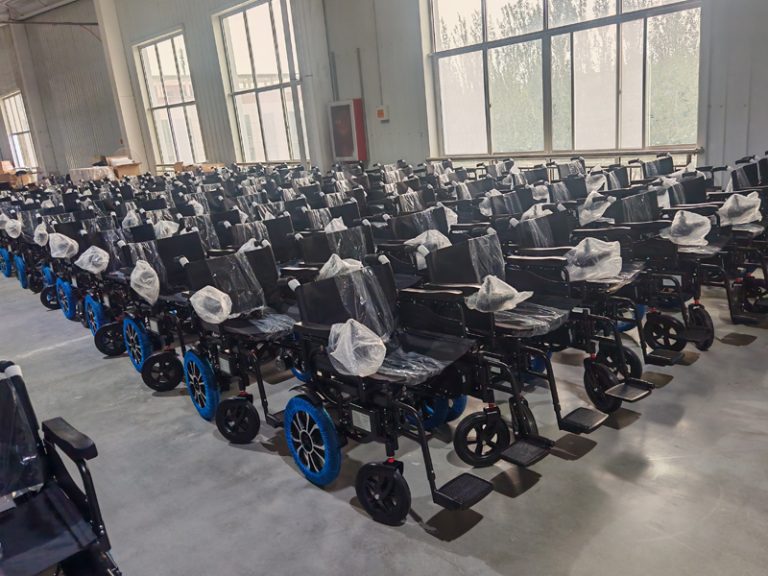
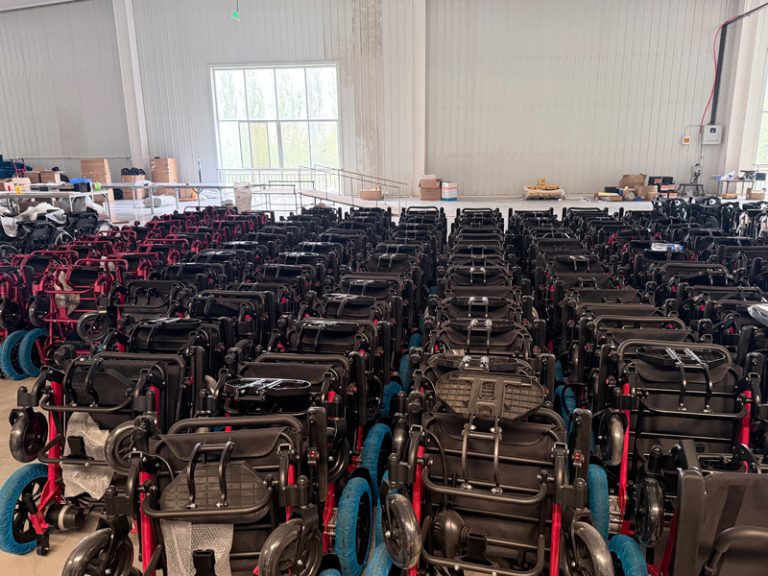
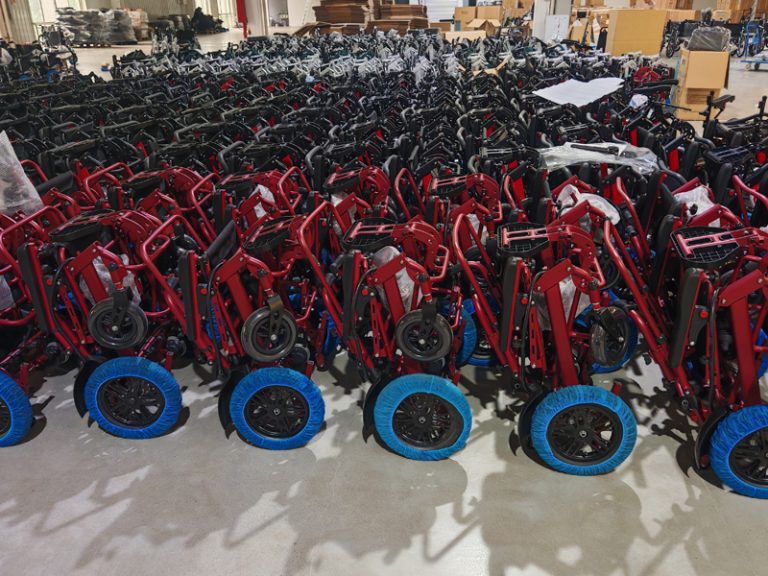
Our Location
Free Trade Tower, Xiyong street.
Chongqing, China

Free Trade Tower, Xiyong street.
Chongqing, China
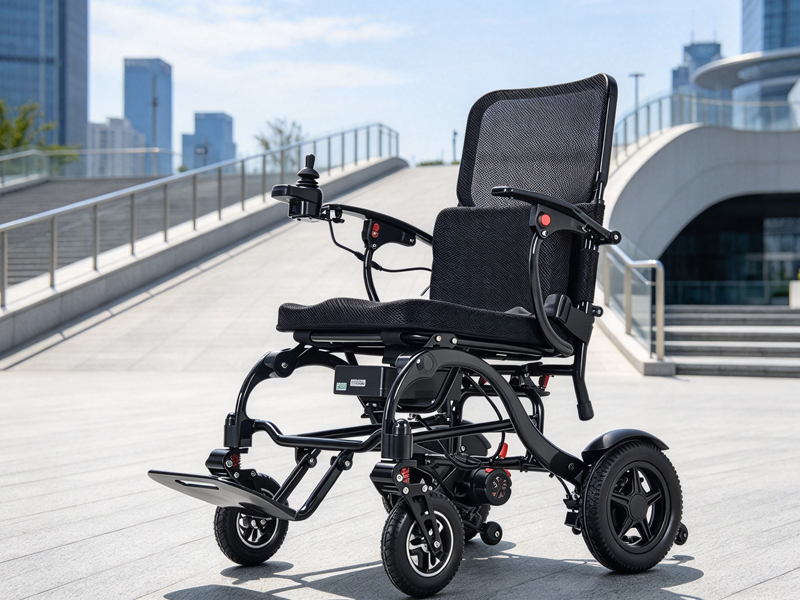
Choosing the right travel wheelchair is about more than finding a lightweight frame or a convenient folding mechanism. For businesses serving travelers, seniors, people with mobility challenges, and customers who value greater independence, the right product can make a meaningful difference to the entire travel experience.
An airline approved Bluetooth travel wheelchair brings together portability, powered mobility, smart connectivity, and practical travel considerations. However, these features should never be judged by marketing claims alone. Battery specifications, folded dimensions, user comfort, control options, durability, and airline handling requirements all deserve careful attention.
For businesses exploring mobility products, Iyasocare offers a useful brand context for thinking about how modern wheelchair design can meet the expectations of today’s mobile customers. Whether you operate a mobility equipment store, manage a travel-related business, distribute assistive products, or purchase wheelchairs for an organization, the goal is the same: choose a product that performs reliably in real-world conditions and makes sense for your customers and your business.
This guide explains what to look for, which specifications matter most, and how to evaluate a Bluetooth-enabled travel wheelchair before making a purchasing decision.
Air travel presents a unique set of challenges for people who use wheelchairs. Airports involve long corridors, security checkpoints, boarding gates, connecting flights, and unfamiliar terminal layouts. A wheelchair that works well around the home may not be convenient enough for these situations.
A portable electric wheelchair can help reduce the physical effort associated with longer journeys, while a folding frame can make ground transportation and storage easier. Bluetooth connectivity may offer additional convenience, depending on the wheelchair’s actual functions and the manufacturer’s implementation.
For businesses, these benefits influence more than customer satisfaction. They also affect product returns, after-sales support, inventory decisions, and the reputation of a mobility equipment brand.
Consider a mobility retailer serving customers who frequently travel internationally. A wheelchair that is relatively easy to fold, simple to operate, and supported by clear battery documentation may be a more practical choice than a model with impressive technology but complicated transportation requirements.
The same principle applies to travel agencies, care organizations, hospitality providers, and equipment distributors. A wheelchair should fit the needs of the person using it and the operational requirements of the organization supplying it.
This is where Iyasocare can be positioned within a thoughtful product-selection strategy: focus on practical mobility, user-centered design, and the details that matter before, during, and after a journey.
The phrase “airline approved” sounds reassuring, but it does not necessarily mean that a wheelchair can be carried into the passenger cabin or accepted automatically by every airline.
In practice, airlines assess battery-powered wheelchairs according to applicable dangerous-goods requirements, battery characteristics, device construction, loading conditions, and their own operational procedures. The distinction is important because a wheelchair can be suitable for air transportation without being small enough to fit inside the cabin.
According to the Federal Aviation Administration (FAA), lithium-ion batteries used in mobility devices must meet specific conditions for safe transportation. Battery protection, prevention of accidental activation, and appropriate handling procedures all matter. Airlines may also impose additional restrictions.
Before purchasing a wheelchair for business use, ask the manufacturer for the information an airline will need:
Do not rely on a product page that simply says “flight friendly.” Request documentation for the exact model and battery configuration you intend to purchase.
For additional guidance, review the FAA’s wheelchair and mobility device transportation requirements and the IATA guidance for battery-powered wheelchairs and mobility aids.
For a business buyer, this step is particularly important when ordering several units. A clear paper trail helps sales teams answer customer questions accurately and reduces the risk of making promises that individual airlines may not honor.
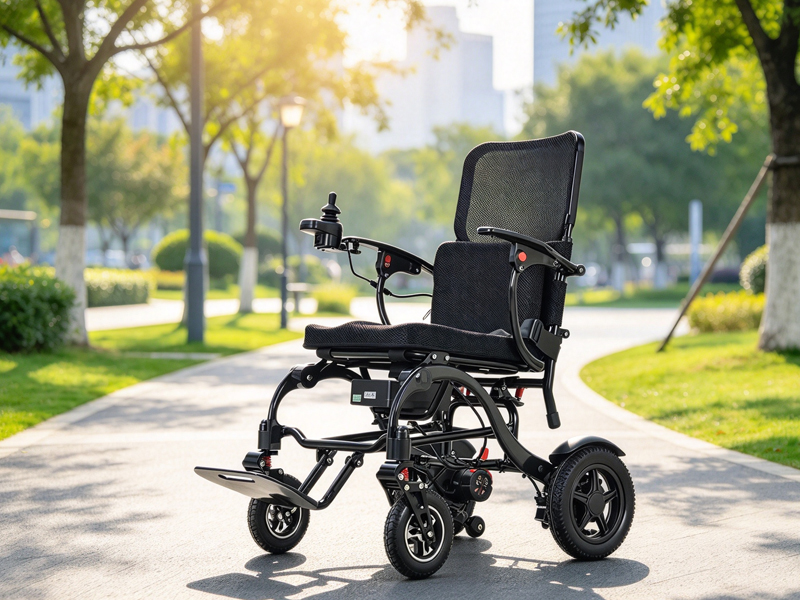
If there is one specification that deserves extra attention, it is the battery.
A Bluetooth travel wheelchair may have a compact frame, an attractive finish, and a convenient folding system, but none of those features makes its battery automatically suitable for air travel.
Battery capacity is usually expressed in watt-hours (Wh). When the voltage and amp-hour rating are available, the calculation is straightforward:
Watt-hours = Voltage × Amp-hours
For example, a battery rated at 24 volts and 6 amp-hours has a nominal capacity of 144 Wh.
The FAA’s published guidance generally allows a lithium-ion wheelchair battery to remain installed when the device’s design adequately protects it against damage and accidental activation, subject to applicable requirements. If the battery is removed, different carriage and protection conditions apply. The permitted arrangement depends on the battery and device configuration, not simply on whether the wheelchair folds.
Under the FAA guidance, a removed lithium-ion battery for a mobility device is generally limited to 300 Wh. Spare-battery allowances also apply: typically, one spare battery of up to 300 Wh or two spare batteries of up to 160 Wh each, subject to the relevant conditions and airline approval where required.
These figures should not be treated as a blanket guarantee of acceptance. Confirm the current rules with the airline operating the flight, especially for international itineraries, connecting flights, and journeys involving multiple carriers.
For business procurement, ask suppliers to provide battery specifications in a consistent format. Comparing products becomes much easier when every quotation includes battery chemistry, Wh rating, removability, charging time, and the manufacturer’s recommended transport procedure.
Also consider battery replacement. Can your team obtain replacement batteries? Are compatible parts available? How does the supplier handle warranty claims involving battery performance? These questions become increasingly important when a wheelchair is used frequently or supplied to customers who travel regularly.
A lower purchase price may be less attractive if replacement batteries are difficult to source or if the product requires extensive customer support.
Bluetooth connectivity can be a useful feature, but its value depends on the functions it supports.
Some connected mobility products may offer smartphone-based controls, while others may use wireless connectivity for diagnostics, configuration, or interaction with a companion application. These capabilities are not interchangeable, and Bluetooth support alone does not confirm that a wheelchair can be driven safely from a phone.
When evaluating an Iyasocare travel wheelchair or any competing product, request a demonstration of the actual Bluetooth functions rather than assuming what the technology provides.
A useful assessment should cover three areas.
First, usability. If the wheelchair supports an application, is it straightforward to pair the phone with the device? Are the instructions clear? Can users understand the connection status without technical assistance?
Second, safety. Does the wheelchair retain an appropriate physical control method? What happens if the phone loses its connection, the application freezes, or the battery in the phone runs out? Ask the manufacturer to explain how the system prevents unintended movement and how the user can regain control.
Third, maintenance and support. Does the application work with current mobile operating systems? Are updates available? Can a distributor or service technician troubleshoot common connection problems?
For a business, these details matter because a feature that is difficult to explain can create more support requests than value. A well-designed connected function should solve a genuine user problem, not simply add another technical specification to a product brochure.
It is also worth distinguishing Bluetooth connectivity from wireless control. A wheelchair may include Bluetooth for diagnostics or accessory communication without supporting smartphone driving. Marketing materials should describe these functions precisely.
When reviewing products under the Iyasocare brand, verify the specifications of the exact model rather than assuming that every wheelchair in a product range offers identical connected features.
A folding wheelchair is not necessarily an easy wheelchair to travel with.
For frequent travelers, portability depends on the entire handling process: approaching a vehicle, folding the frame, lifting or rolling the device, storing it, and preparing it for use again.
A compact folded size is useful, but total weight is equally important. A wheelchair may fold into a small package yet remain too heavy for the intended user or caregiver to lift comfortably.
Before purchasing, compare the following measurements:
| Specification | Why it matters |
|---|---|
| Overall weight | Affects lifting, transfers, and transportation between vehicles |
| Folded dimensions | Helps determine storage requirements in vehicles and accommodation |
| Unfolded dimensions | Influences indoor maneuverability and access through narrow spaces |
| Battery weight | Affects handling if the battery must be removed |
| Folding time | Matters when the user needs to prepare the chair frequently |
| Transport method | Determines whether the device is best lifted, rolled, or stored with assistance |
Do not overlook the practical difference between a wheelchair that folds in seconds and one that requires several complicated steps. A process that seems manageable in a showroom can become frustrating in a busy airport or a crowded parking area.
Ask the supplier to demonstrate folding and unfolding with the battery installed and, if applicable, with the battery removed. Confirm that the procedure follows the manufacturer’s instructions and does not require excessive force.
It is equally important to verify the folded wheelchair’s dimensions against the specific airline’s requirements. Cabin storage is not guaranteed simply because a device is marketed as compact. Even when a wheelchair can be transported on the aircraft, it may need to travel in the cargo compartment.
For business buyers, these practical details should be included in product demonstrations, staff training, and customer-facing specifications.
A travel wheelchair may spend hours in use during a long airport transfer or a full day of sightseeing. If the seat is uncomfortable or the controls are difficult to operate, its portability offers only part of the solution.
Start with seat width and depth. The chair should provide appropriate support without restricting movement or creating excessive pressure. Consider backrest height, cushion design, footrest positioning, armrest support, and the availability of adjustments.
Next, examine the control system. A joystick should respond predictably, and the user should be able to understand its operation without unnecessary complexity. Controls must suit the intended user’s hand strength, coordination, and range of movement.
Turning radius is another useful specification. A smaller turning radius may make it easier to maneuver in hotel corridors, shops, airport waiting areas, and other confined spaces. However, actual performance depends on the wheelchair’s geometry, drive system, and the user’s skill.
The terrain rating also deserves attention. A chair designed primarily for smooth indoor surfaces may not perform well on uneven pavement, steep ramps, or rough outdoor paths. If customers are likely to use the wheelchair during sightseeing trips, ask for clear information about gradients, surface limitations, braking, and stability.
Finally, check the rated user weight and the manufacturer’s operating limits. Do not assume that two wheelchairs with similar dimensions offer the same load capacity or ride quality.
For Iyasocare and other mobility brands, a credible product evaluation should emphasize how the wheelchair performs for its intended users, rather than relying on appearance or technology alone.
Battery range is another specification that deserves careful scrutiny.
Manufacturers often publish a maximum travel distance under particular test conditions. Real-world range may be lower because of passenger weight, terrain, temperature, frequent stopping, speed settings, tire condition, and battery age.
A wheelchair intended for occasional airport use may have different range requirements from one used throughout an entire day of travel.
Instead of comparing headline range figures alone, consider the customer’s likely journey. How far will the user travel between charging opportunities? Will the wheelchair be used indoors and outdoors? Is there a convenient way to recharge it at a hotel or other destination?
Charging time also matters. A wheelchair that needs a long charging period may be inconvenient for customers moving between destinations each day. Ask whether the charger is compatible with the electrical supply in the markets where you sell the product, and whether the manufacturer provides suitable charging instructions.
Reliability extends beyond the battery. Check the availability of replacement tires, controllers, chargers, connectors, and other service parts. Ask about warranty coverage, repair procedures, and the expected response time for technical support.
For a distributor or retailer, reliable after-sales service can be a more meaningful competitive advantage than one additional convenience feature. Customers purchasing mobility equipment often need reassurance that help will be available if something goes wrong.
A business should therefore evaluate the supplier as carefully as the wheelchair itself.
Once you understand the essential features, it becomes easier to compare products systematically. Rather than relying on a single attractive specification, create a purchasing scorecard that reflects your customers’ actual needs.
A practical starting point is to evaluate six areas:
A business can assign weights to these categories according to its market. For example, an airport mobility service may prioritize handling and battery documentation, while an online retailer may place additional emphasis on clear specifications, packaging, and remote customer support.
It is also worth testing the product before committing to a large order. Request a sample unit where possible and assess it under realistic conditions. Have staff fold it, load it into a vehicle, operate its controls, inspect the charging system, and review the manufacturer’s maintenance instructions.
If Bluetooth functionality is advertised, test the actual supported functions and confirm how the system behaves when connectivity is interrupted.
A sample evaluation can reveal practical issues that a product catalogue cannot. It also gives sales and customer-service teams first-hand knowledge, helping them provide more accurate answers to prospective buyers.
Selecting a wheelchair brand should involve more than a one-time comparison of price and appearance. For a business, the decision affects customer trust, operational efficiency, and the ability to build a sustainable product range.
When evaluating Iyasocare, begin by identifying the exact model that fits your market. Confirm its published specifications, supported Bluetooth functions, battery configuration, folding dimensions, warranty terms, and available service arrangements.
Request written documentation for every feature that influences purchase decisions. If the product is intended for air travel, obtain the manufacturer’s battery-handling instructions and confirm the requirements with the airlines your customers are likely to use.
It is also sensible to discuss order quantities, lead times, spare-parts availability, packaging, and technical support before placing a commercial order. For businesses operating across different countries, confirm that the documentation, charger configuration, and customer instructions are appropriate for each destination market.
Avoid making broad claims such as “accepted by every airline” unless the statement can be substantiated, which is rarely an appropriate blanket promise. A more useful approach is to provide accurate model-specific information and help customers confirm their travel arrangements.
The strongest product proposition is not necessarily the wheelchair with the longest feature list. It is the one that meets the needs of its intended users, can be supported throughout its service life, and has documentation that makes purchasing and travel preparation easier.
For businesses building a mobility product portfolio, Iyasocare can be part of that evaluation. The final decision should rest on verified product specifications, a practical demonstration, supplier support, and the needs of the customers you serve.
1. Can an airline approved Bluetooth travel wheelchair be taken into the aircraft cabin?
Not necessarily. “Airline approved” does not automatically mean cabin-approved. Many powered wheelchairs travel in the aircraft’s cargo compartment, and cabin storage depends on the aircraft, available space, applicable rules, and airline procedures. Battery type, capacity, installation, and protection also affect transportation arrangements. Contact the operating airline before departure and provide the exact wheelchair and battery specifications.
2. What battery capacity should a Bluetooth travel wheelchair have for air travel?
There is no single capacity that guarantees acceptance in every situation. The relevant requirements depend on whether the lithium-ion battery remains installed and adequately protected or must be removed, along with the applicable aviation rules and airline policies. Under FAA guidance, a removed lithium-ion mobility-device battery is generally limited to 300 Wh, with separate restrictions for spare batteries. Always verify the exact battery configuration with the manufacturer and airline before travel.
3. What should businesses check before buying an Iyasocare Bluetooth travel wheelchair in bulk?
Businesses should verify the exact model’s specifications, airline transportation documentation, battery details, folding dimensions, user weight limit, comfort, supported Bluetooth functions, warranty coverage, spare-parts availability, and supplier support. Testing a sample unit before placing a large order is a sensible way to identify handling or usability issues. Clear product documentation also helps sales teams set accurate customer expectations and reduces avoidable support problems.