Our Location
Free Trade Tower, Xiyong street.
Chongqing, China

Free Trade Tower, Xiyong street.
Chongqing, China
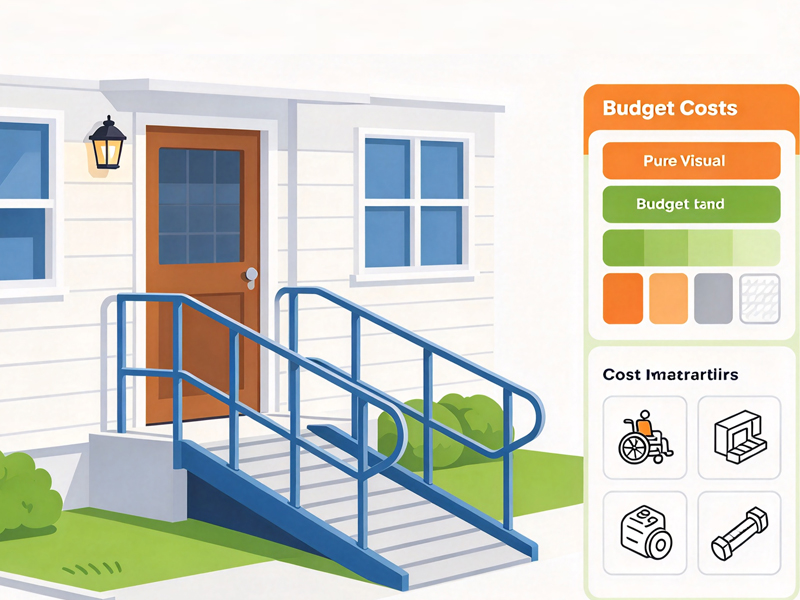
Installing a wheelchair ramp can make a home safer, more accessible, and easier to navigate for someone with limited mobility. Whether you are helping an aging parent remain independent, making a home more accessible after an injury, or planning ahead for long-term mobility needs, understanding the cost of a wheelchair ramp is an important first step.
The price, however, is rarely as simple as buying a ramp and attaching it to the front door. The total cost depends on the ramp material, the height of the entrance, the length and layout of the ramp, local labor rates, permitting requirements, and whether the installation requires additional construction.
So, how much does a wheelchair ramp cost to install? For a typical U.S. home, a professionally installed wheelchair ramp may cost approximately $1,000 to $8,000, while larger, more complex, or custom-built projects can cost $10,000 or more. Portable ramps may cost only a few hundred dollars, whereas permanent aluminum or wooden ramps can require a considerably larger investment.
The following estimates provide a starting point for budgeting. Actual prices vary by location, ramp dimensions, site conditions, and the contractor you hire.
| Wheelchair ramp type | Estimated purchase or installation cost |
|---|---|
| Portable threshold ramp | $50–$250 |
| Portable folding wheelchair ramp | $100–$600 |
| Modular aluminum ramp | $1,500–$6,000 |
| Professionally installed wooden ramp | $1,000–$5,000 |
| Permanent aluminum ramp | $2,000–$8,000 |
| Concrete wheelchair ramp | $3,000–$10,000+ |
| Custom-designed accessibility ramp | $5,000–$15,000+ |
These are broad planning estimates, not guaranteed quotes. Some prices include basic installation, while others may reflect the ramp alone or a simplified project. Always confirm what a contractor’s estimate covers before comparing prices.
For example, a short ramp at a low entrance may require relatively little material and labor. A raised porch with several steps, limited yard space, and a narrow approach may need a much longer ramp, multiple turns, handrails, landings, and additional groundwork.
The most useful way to estimate your project is to start with the entrance height and the ramp design, then add material, labor, and site preparation costs.
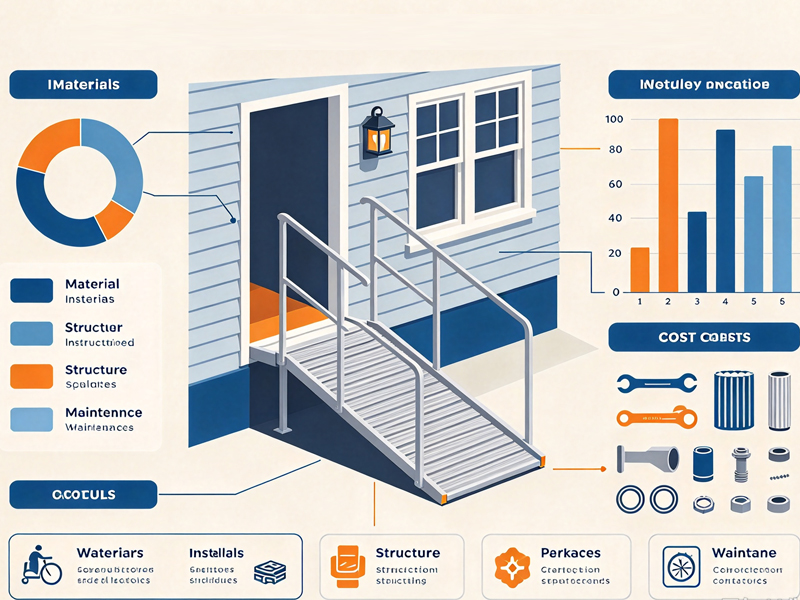
Two homes can require very different budgets even when both homeowners want a ramp at the front door. Several factors explain the difference.
1. Ramp Length and Entrance Height
Ramp length is one of the biggest cost drivers because a higher entrance generally requires a longer ramp to provide a manageable slope.
For planning purposes, the commonly used accessibility guideline is a maximum slope of 1:12 for many wheelchair ramps covered by applicable accessibility standards. This means that for every inch of vertical rise, the ramp needs approximately 12 inches of horizontal running length.
For example, a 24-inch rise would require about 24 feet of ramp run at a 1:12 slope. This calculation does not include additional space for landings, turns, or approach areas.
A lower entrance may need only a short ramp, while a porch that sits several feet above the ground could require a long switchback design. More length generally means more decking, framing, supports, fasteners, and installation time.
The 1:12 ratio is a useful starting point, not a universal legal requirement for every residential project. Applicable building codes, accessibility standards, site conditions, and the needs of the wheelchair user should guide the final design.
2. Material Selection
The material you choose affects the initial price, durability, maintenance requirements, and appearance of the finished ramp.
Wood often has a lower upfront cost and can be customized to match an existing porch. Aluminum typically costs more initially but offers low maintenance and weather resistance. Concrete can create a durable, permanent entrance but usually requires more extensive site preparation and construction.
The least expensive material is not necessarily the cheapest option over the long term. A wooden ramp that requires regular repairs or replacement may eventually cost more to maintain than a well-installed aluminum system.
3. Labor and Installation Complexity
Labor costs depend on the project size, local contractor rates, accessibility requirements, and the amount of construction involved.
A simple modular ramp installed on a prepared surface may take substantially less time than a custom wooden ramp built around an existing porch. Contractors may need to remove steps, level the ground, install support posts, build landings, adjust drainage, or modify the doorway.
Labor is also affected by access to the property. A straightforward front entrance may be easier to work on than a sloped backyard with limited equipment access.
When requesting estimates, ask contractors to separate labor, materials, site preparation, and optional upgrades. This makes it easier to identify where costs can be reduced.
4. Landings, Handrails, and Safety Features
A wheelchair ramp is more than a sloped surface. Depending on the design and applicable requirements, it may need level landings, handrails, edge protection, stable transitions, and adequate maneuvering space.
These features add to the total price, but they should not be treated as unnecessary extras. A ramp that is too narrow, slippery, steep, or difficult to turn on may create additional risks for the person using it.
The landing at the top is especially important. The user needs enough space to approach the doorway, turn if necessary, and operate the door without rolling backward or becoming trapped against a railing.
Budgeting for safety from the beginning is usually more practical than trying to retrofit missing features after installation.