Our Location
Free Trade Tower, Xiyong street.
Chongqing, China

Free Trade Tower, Xiyong street.
Chongqing, China
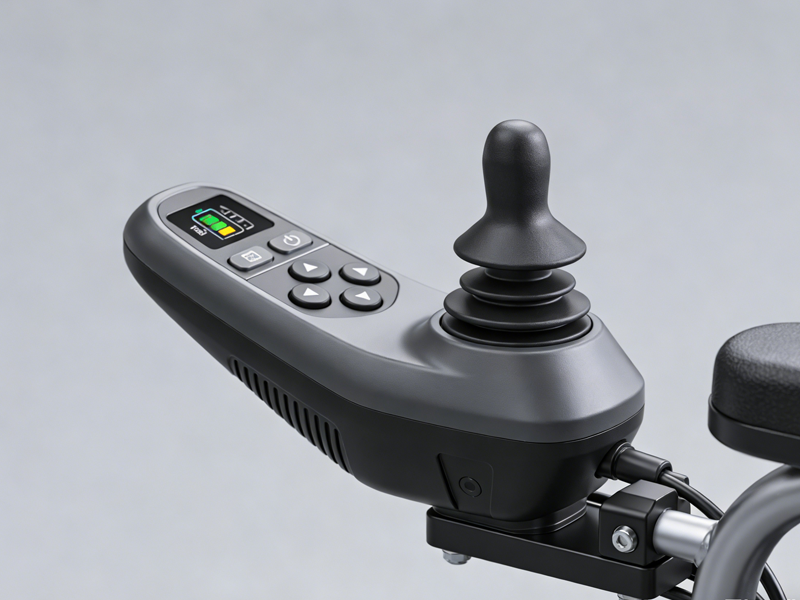
When people first encounter electric wheelchairs, they often assume the joystick is a simple steering tool—push forward to go, pull back to stop. But anyone who has spent real time using or selecting one quickly realizes the joystick controller is the brain of the entire mobility system. It dictates not only movement, but comfort, safety, customization, and long-term usability.
So, how many categories of electric wheelchair joystick controllers are there?
there isn’t a single universal number. However, in practical, industry-level classification, joystick controllers can be grouped into five primary categories, each designed for specific user needs, physical abilities, and environments. Understanding these categories is essential whether you’re a user, caregiver, distributor, or healthcare professional.
This is where most users begin—and for good reason.
Standard proportional joysticks are the most widely used category in electric wheelchairs. The term “proportional” refers to how the wheelchair responds: the farther you push the joystick, the faster the chair moves. This creates a smooth, intuitive driving experience that mimics natural hand movement.
What makes this category so dominant is its balance between simplicity and control. Users with moderate to full hand mobility can operate these controllers without extensive training. Most models also include integrated buttons or membranes for speed adjustment, horn activation, and mode switching.
From an engineering perspective, these joysticks rely on analog input signals, allowing for precise directional control. That’s why they’re commonly found in both entry-level and mid-range powered wheelchairs.
However, their effectiveness depends heavily on the user’s hand stability. Even minor tremors or fatigue can impact control, which is where the next category comes in.
Compact joysticks are designed for users who need less force and smaller movement ranges to operate their wheelchair.
These controllers are physically smaller and require minimal displacement to register motion. Instead of needing a full hand grip, they can often be controlled with fingertips or even slight nudges from a single finger.
This category is especially useful for individuals with:
The sensitivity of micro joysticks is both their strength and their challenge. While they allow access to powered mobility for users who might otherwise struggle, they require careful calibration to prevent over-responsiveness.
Manufacturers often include adjustable sensitivity settings, dead zones, and acceleration curves to fine-tune the experience. In clinical environments, occupational therapists frequently assist in configuring these settings to match individual user profiles.
Not all wheelchairs are used indoors or on smooth hospital floors. For users navigating rugged terrain, construction sites, or outdoor environments, durability becomes a priority.
Heavy-duty joystick controllers are built with reinforced housings, sealed electronics, and enhanced resistance to dust, moisture, and impact. Internally, they often use more robust components to withstand repeated stress and environmental exposure.
This category is commonly paired with:
The design philosophy here shifts from compact sensitivity to reliability under pressure. Buttons are larger, feedback is more tactile, and the joystick shaft itself may be thicker or reinforced.
While these controllers may not offer the same fine precision as micro joysticks, they excel in consistency and longevity—critical factors for users who depend on their wheelchair in demanding environments.
As electric wheelchairs evolve, so do their control systems. Programmable joystick controllers represent the intersection of mobility and digital intelligence.
These controllers allow users—or technicians—to customize nearly every aspect of performance, including:
Many advanced models also feature LCD or OLED displays, providing real-time feedback such as battery status, error diagnostics, and speed indicators.
Some systems even integrate Bluetooth connectivity or companion apps, enabling remote adjustments and firmware updates.
What sets this category apart is adaptability. A programmable joystick can be tailored to a user’s changing physical condition over time, making it a long-term solution rather than a fixed interface.
For users with progressive conditions, this flexibility can significantly extend the usability of their wheelchair without requiring hardware replacement.
This final category is less about traditional joysticks and more about adaptive control solutions built around the joystick concept.
Not every user can operate a standard hand-controlled joystick. For individuals with severe mobility limitations, alternative interfaces are essential. These systems may include:
While these may not look like conventional joysticks, they perform the same core function: translating user intent into directional movement.
This category is highly specialized and typically requires professional assessment and customization. It’s often used in advanced rehabilitation settings or for users with conditions such as spinal cord injuries or advanced ALS.
The key takeaway here is that joystick control is not a one-size-fits-all concept—it’s a flexible framework that can be adapted to almost any physical capability.
If you’re looking for a strict numerical answer, the industry generally recognizes five main categories:
However, in real-world applications, these categories often overlap. A single controller might be both programmable and compact, or heavy-duty and smart-enabled.
So instead of thinking in rigid boxes, it’s more accurate to view these categories as functional layers that can be combined based on user needs.
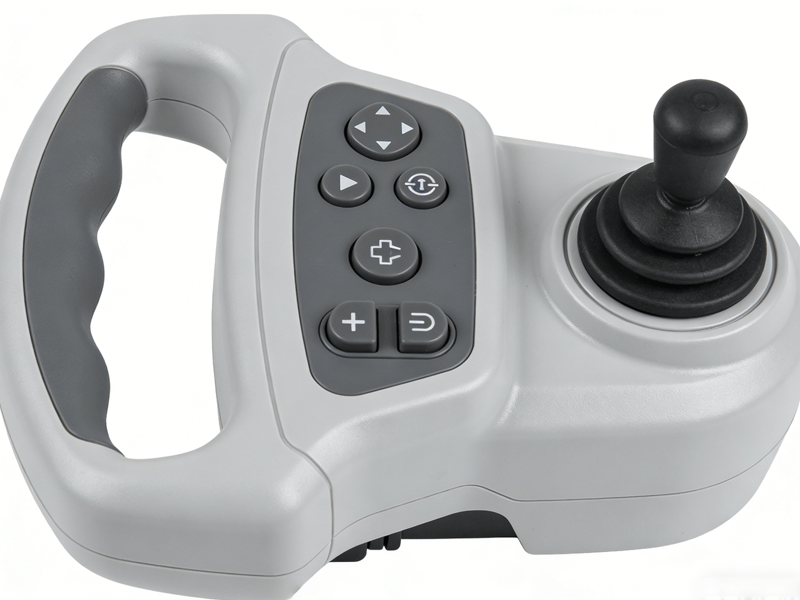
Understanding joystick categories isn’t just technical knowledge—it directly impacts quality of life.
Choosing the wrong controller can lead to:
On the other hand, the right controller can dramatically improve mobility confidence, daily efficiency, and long-term comfort.
For caregivers and buyers, this knowledge helps avoid costly mistakes. For businesses and distributors, it improves product positioning and customer satisfaction. And for users, it opens the door to a more personalized mobility experience.
Electric wheelchair joystick controllers have evolved far beyond simple directional tools. They are now sophisticated interfaces that bridge human intention and machine movement.
While five primary categories provide a useful framework, the real value lies in understanding how these systems adapt to individual needs. The future of mobility is not just about moving—it’s about moving on your own terms.
1. Can one joystick controller fit all electric wheelchairs?
Not always. While some controllers are compatible across multiple models, many are designed specifically for certain wheelchair brands or systems. Compatibility depends on the electronics, firmware, and connector types used in the chair.
2. How do I know which joystick category is right for me?
The best approach is to consider your physical abilities, daily environment, and long-term needs. Consulting with a mobility specialist or occupational therapist can help match you with the most suitable controller type.
3. Are programmable joystick controllers worth the investment?
For many users, yes. They offer flexibility, adaptability, and future-proofing. If your needs may change over time or you want a more customized driving experience, programmable controllers provide significant advantages.