Our Location
Free Trade Tower, Xiyong street.
Chongqing, China

Free Trade Tower, Xiyong street.
Chongqing, China
Mobility is not a luxury. It is a basic human need that shapes how people experience the world—how they move through their homes, engage with family, participate in work, and maintain dignity in daily routines. For individuals with limited mobility, choosing the right wheelchair is not simply a technical decision; it is a deeply personal one.
lightweight wide wheelchairs have become an essential category. They bridge the gap between strength and usability, comfort and practicality, independence and caregiver support. When designed well, they do more than transport the user—they support a lifestyle.
Traditional wheelchairs were often built with durability as the sole priority. While strength remains essential, modern users expect more. Weight, seat width, adjustability, and portability now play equally important roles.
A lightweight wheelchair reduces physical strain. It is easier to propel, easier to lift into a vehicle, and easier for caregivers to maneuver. Over time, reduced weight also means less fatigue for users who self-propel daily.
A wide wheelchair, on the other hand, is about respect for the human body. People come in different shapes and sizes, and a narrow seat can cause discomfort, pressure points, poor posture, and even long-term health issues. A wider seat allows natural sitting posture, improved circulation, and a sense of security—especially for long sitting periods.
When these two features come together in a well-engineered design, the result is a wheelchair that feels supportive rather than restrictive.
Manual wheelchairs remain one of the most widely used mobility solutions worldwide. Their simplicity, reliability, and independence from power sources make them ideal for a broad range of users.
However, not all manual wheelchairs are created equal.
A modern lightweight wide manual wheelchair should balance four key elements:
Structural strength
User comfort
Ease of transport
Long-term durability
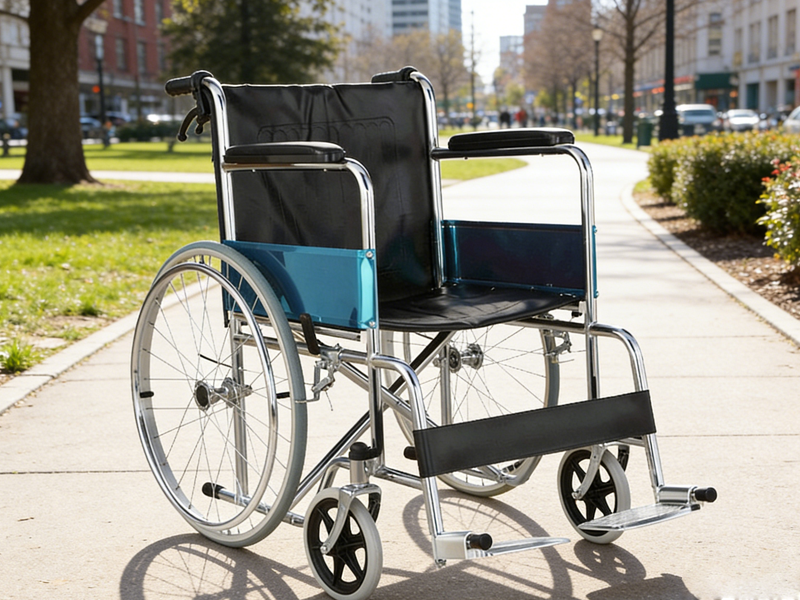
One strong example of this balance is a carbon steel manual wheelchair with a foldable backrest and adjustable footrests.
Carbon steel, when used correctly, offers excellent load-bearing capacity while maintaining manageable weight. A well-designed frame can support higher weight limits without feeling bulky or difficult to handle. Combined with a foldable backrest, the chair becomes significantly easier to store and transport, whether in a car trunk or a storage room.
Adjustable footrests and reversible armrests are not minor details—they are essential features. They allow users to adjust posture, support different leg lengths, and make transfers in and out of the chair safer and more comfortable.
Large rear wheels provide smoother propulsion, while stable front casters help maintain balance on indoor surfaces and outdoor paths. Together, these elements create a wheelchair suitable for everyday living, not just short-term use.
Comfort is often misunderstood as a luxury feature. In reality, it is a functional necessity.
A wide seat does more than provide space. It reduces pressure on the hips, supports better spinal alignment, and allows users to sit naturally rather than forcing the body to adapt to the chair. This becomes especially important for users who spend many hours a day seated.
Seat depth, backrest height, armrest positioning, and footrest alignment all work together. When one element is poorly designed, it affects the entire sitting experience.
Lightweight wide wheelchairs designed with ergonomics in mind allow users to maintain comfort without sacrificing mobility. They also reduce the risk of secondary complications such as skin irritation, muscle strain, and circulation issues.
For many users, mobility challenges are closely tied to personal care needs. Transferring between a wheelchair and a separate toilet chair can be physically demanding, time-consuming, and emotionally stressful.
This is where manual commode wheelchairs become transformative.
A well-designed commode wheelchair combines mobility and toileting functionality into a single, dignified solution. It allows users to maintain independence while simplifying care routines for families and caregivers.
A lightweight folding manual commode wheelchair with a removable bedpan is particularly practical. By integrating a commode opening directly into the seat and providing an easily removable bedpan, the chair supports personal hygiene without requiring additional equipment.
The benefits are immediate:
Reduced transfers and fall risk
Easier nighttime or emergency use
Improved dignity and privacy
Less physical strain for caregivers
When built with a sturdy but lightweight frame, the chair remains easy to move and store, even in smaller living spaces.
When evaluating a lightweight wide wheelchair—especially a commode model—it’s important to look beyond the headline features.
Foldability is one such detail. A folding frame allows the wheelchair to adapt to changing environments. It fits into vehicles, moves between rooms easily, and stores away when not in use.
Wheel size and placement also matter. Larger rear wheels provide better control and smoother movement, while well-designed front casters improve maneuverability in tight spaces like bathrooms and hallways.
Brake systems should be easy to operate and reliable. For commode use, stability during transfers is critical, and secure locking mechanisms provide peace of mind.
Materials matter as well. Chromed or treated steel surfaces resist corrosion and simplify cleaning, which is particularly important for hygiene-focused designs.
These wheelchairs are not limited to one type of user. They serve a wide range of needs:
Adults who require daily mobility support
Seniors seeking comfort and stability
Users with larger body frames
Patients recovering from surgery or injury
Individuals with long-term mobility conditions
Home caregivers and healthcare facilities
In home settings, they simplify daily routines. In clinical or assisted-living environments, they reduce caregiver workload while improving patient comfort.
One of the biggest misconceptions about wide wheelchairs is that they must be heavy or difficult to transport. Modern designs prove otherwise.
With foldable frames, removable components, and optimized weight distribution, lightweight wide wheelchairs can be surprisingly easy to handle. Many models are suitable for travel, whether for medical appointments, family visits, or longer trips.
This portability supports a more active lifestyle. Users are not confined to a single space—they can participate in social activities, maintain routines, and travel with confidence.
A wheelchair is a long-term investment. Proper maintenance ensures safety and extends product life.
Routine checks should include:
Wheel alignment and tire condition
Brake responsiveness
Frame integrity
Tightness of screws and joints
Lightweight does not mean fragile. High-quality frames are built to withstand daily use, provided they are cared for properly. Cleaning, especially for commode wheelchairs, should be simple and regular, supported by materials designed for hygiene and durability.
Selecting the right wheelchair requires more than comparing specifications. It requires understanding how the chair will fit into daily life.
Ask practical questions:
Will it be used indoors, outdoors, or both?
Is portability important?
How many hours per day will the user sit in the chair?
Are toileting functions needed?
Will caregivers assist regularly?
Lightweight wide wheelchairs—especially those that combine mobility and commode functionality—offer flexible answers to these questions.
A wheelchair should never feel like a limitation. When thoughtfully designed, it becomes a tool of freedom—supporting independence, comfort, and dignity.
Lightweight wide wheelchairs reflect a shift in how mobility aids are engineered and perceived. They acknowledge that users deserve strength without heaviness, space without bulk, and functionality without compromise.
Whether choosing a manual wheelchair for everyday movement or a commode wheelchair for integrated care, the goal remains the same: to support real lives, real routines, and real independence.